INTEGRATING ARTIFICIAL INTELLIGENCE, MOLECULAR DYNAMICS, AND DFT TO INVESTIGATE MONOAMINE OXIDASE INHIBITION
Augustas Markevičius1, Gintautas Bagdžiūnas2
1 Group of Supramolecular Analysis and Bioelectronics, Institute of Biochemistry at Life Sciences Centre, Vilnius University, Saulėtekio av. 7, LT-10257, Vilnius, Lithuania
Monoamine neurotransmitters, including catecholamines and indoles, are metabolized by monoamine oxidase (MAO), an enzyme existing in two isoforms: MAO-A and MAO-B. These isoforms exhibit distinct substrate specificities and tissue distribution. [1], [2] MAO inhibitors are widely prescribed as antidepressants for major depressive disorder, schizophrenia, and other neurological and psychiatric conditions. [3]
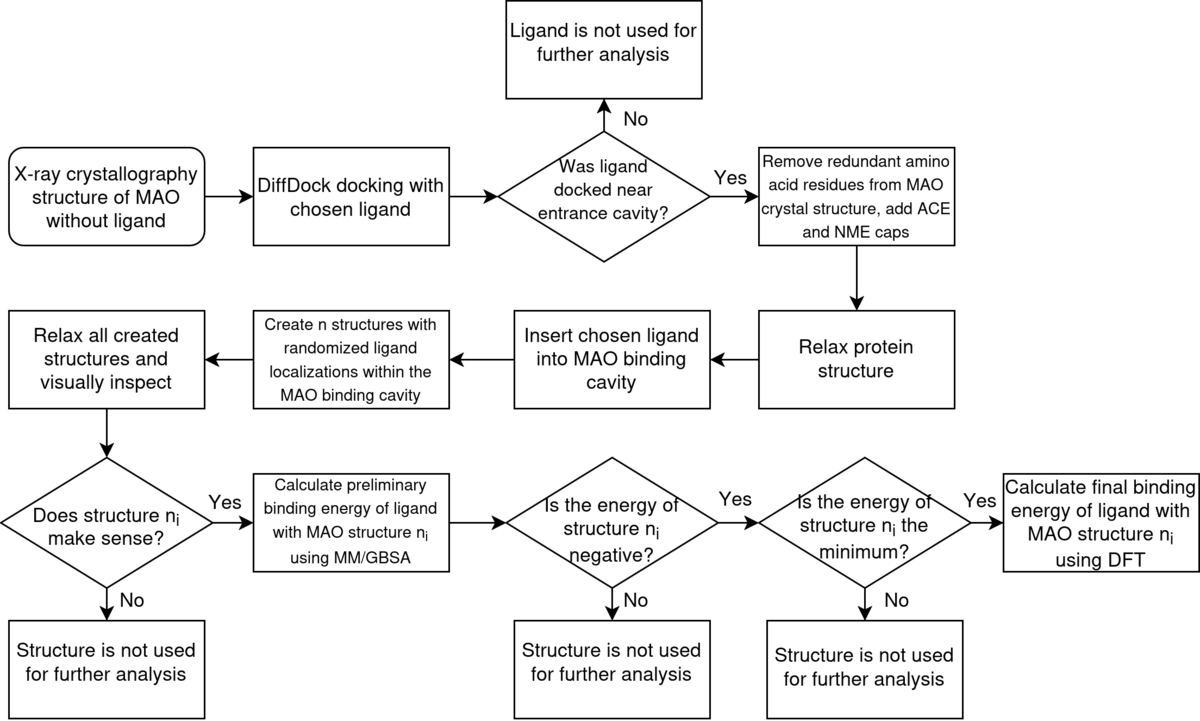
Fig. 1. The workflow for modeling the enzyme-ligand complex.
This study investigates the structures, biocatalytic mechanisms, and inhibitor interactions of human MAO-A and MAO-B using X-ray crystallography data and published literature. We generated theoretical models of the enzyme active sites bound to non-covalent inhibitors (Fig 1). These models were compared with available substrate-enzyme intermediate structures. Employing artificial intelligence, molecular dynamics, and density functional theory (DFT) calculations, we determined the structures and energetic parameters of the active site-inhibitor complexes. This work aims to facilitate the more rapid and reliable prediction of novel antidepressant drugs.
[1] Edmondson, D. E., Mattevi, A., Binda, C., Li, M., & Hubalek, F. (2004). Structure and mechanism of monoamine oxidase. Current Medicinal Chemistry, 11(15), 1983–1993. https://doi.org/10.2174/0929867043364784
[2] Jahng, J. W., Houpt, T. A., Wessel, T. C., Chen, K., Shih, J. C., & Joh, T. H. (1997). Localization of monoamine oxidase A and B mRNA in the rat brain by in situ hybridization. Synapse, 25(1), 30–36. https://doi.org/10.1002/(sici)1098-2396(199701)25:1
[3] Duarte, P., Cuadrado, A., & León, R. (2020). Monoamine oxidase inhibitors: From classic to new clinical approaches. Handbook of Experimental Pharmacology, 229–259. https://doi.org/10.1007/164_2020_384