
Antibiotics are the primary treatment for bacterial infections. However, the misuse and overuse of antibiotics have led to a global rise in multidrug-resistant (MDR) pathogens, posing a severe public health challenge. Stenotrophomonas maltophilia is an emerging opportunistic pathogen responsible for nosocomial infections. Due to its strong biofilm- forming ability and extensive antimicrobialg resistance, alternative inactivation strategies are needed [1]. One promising approachs is antimicrobial photodynamic therapy (aPDT), which utilizes a photosensitizer (PS), light and molecular oxygen to generate cytotoxic reactive oxygen species (ROS), leading to microbial cell damage and inactivation [2]. Porphyrins are widely used as a PS due to their high ROS generation efficiency, particularly singlet oxygen(\(^{1}\)O\(_{2}\)), and broad absorption spectrum [3]. 5-aminolevulinic acid (ALA) serves as a precursor in the heme biosynthesis pathway, leading to the production of various endogenous porphyrins (protoporphyrin IX, uroporphyrin, coproporphyrin and metalloporphyrins) [4].
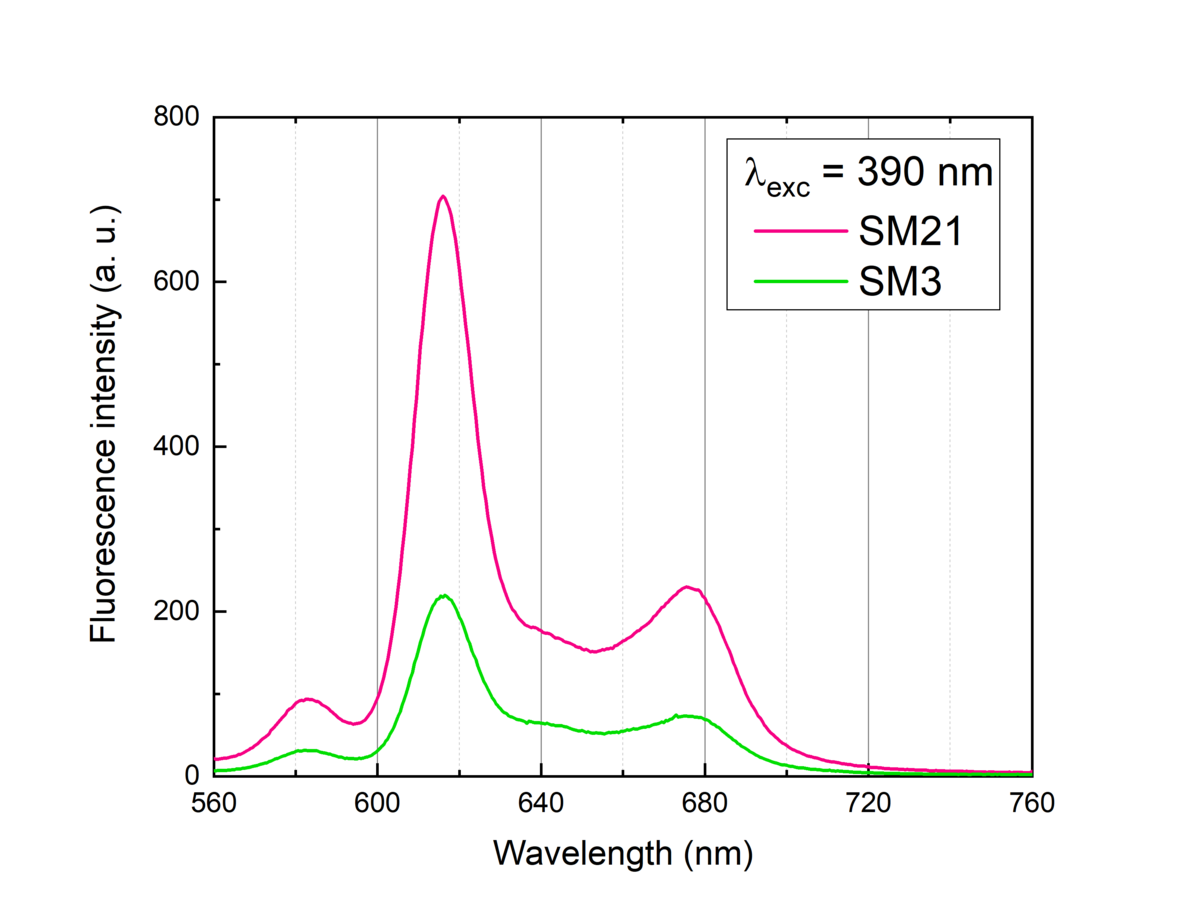
The study aimed to evaluate the endogenous porphyrin synthesis in different biofilm-forming and multi-drug resistant clinical isolates of S. maltophilia (SM3 and SM21) and assess the inactivation efficiency of ALA-based aPDT against them. S. maltophilia isolates were incubated with 0.5, 1, and 5 mM ALA in the dark at 37°C for up to 24 h. At different incubation periods, porphyrin fluorescence intensity was measured using excitation wavelengths within the Soret band (390 nm, 405 nm and 420 nm). Fluorescence excitation and emission spectra were recorded using an LS55 fluorescence spectrophotometer (PerkinElmer, USA), with excitation and emission slits set to 5 nm and 7.5 nm, respectively. The results indicate that compared to the SM3 isolate, the SM21 clinical isolate synthesized a higher amount of porphyrins. These findings suggest that differences in porphyrin production among S. maltophilia isolates could influence their susceptibility to ALA-based aPDT. Further results, including aPDT inactivation efficiency and porphyrin quantification, will be presented in the poster session.
Keywords: antimicrobial photodynamic therapy, Stenotrophomonas maltophilia, 5-aminolevulinic acid, porphyrin synthesis, multidrug resistance, fluorescence spectroscopy