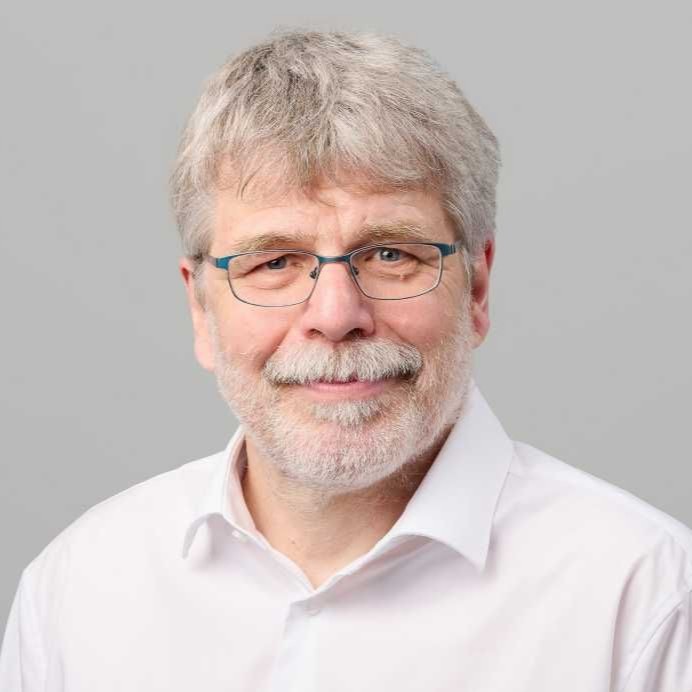
Prof. Jérôme Faist
Institute of Quantum Electronics, ETH Zürich
ABOUT THE SPEAKER

Jérôme Faist is a Swiss physicist and professor at the Institute of Quantum Electronics at ETH Zürich. He obtained his Bachelor’s degree in 1985 at EPF Lausanne. His Ph.D. studies focused on optoelectronics, in particular vertical-cavity surface-emitting lasers and optical modulators (doctoral degree in 1989). Following his doctorate, he worked at IBM in Rüschlikon as a post-doc between 1989 and 1991. In 1991, he switched to Federico Capasso’s group at Bell Laboratories, Lucent Technologies, in Murray Hill, New Jersey, where he first worked as a post-doc investigating intersubband transitions. In 1994, he succeeded in building an experimental quantum cascade laser using molecular-beam epitaxy, in collaboration with Federico Capasso, Deborah Sivco, Carlo Sirtori, Albert Hutchinson and Alfred Y. Cho.
In 1997, Faist became full professor at the University of Neuchâtel, Switzerland, where he remained until 2007. His work there focused mainly on mid- and far-infrared intersubband lasers. In 1998, he founded the spin-off company Alpes Lasers with the goal of commercialising the quantum cascade laser for scientific, industrial and medical use. In 2007, he became professor at the Institute of Quantum Electronics at ETH Zürich, and he also became head of the FIRST-lab Center for Micro- and Nanoscience at ETH.
His current research interests are the development of high-performance quantum cascade lasers in the mid- and far-infrared and the physics of coherence in intersubband transitions in the presence of strong magnetic fields.
Prof. Faist was invited to open the session dedicated to Laser Physics and Materials Science at the Open Readings 69th International Conference for Students of Physical and Natural Sciences by delivering a talk titled “Semiconductor quantum walk combs from the near-infrared to the terahertz”. After the lecture, the professor kindly agreed to give an interview about his current scientific work and academic achievements. He was interviewed by Assoc. Prof. Dr. Renata Butkutė, Deputy Head of the Optoelectronics Department at Center for Physical Sciences and Technology.
THE INTERVIEW
Probably the two main factors that had the most influence on my choice of profession were my physics teacher and my father. When I was still a schoolboy, I had a very good physics teacher, who interested me in simple physics laws by explaining them with examples from nature and everyday life. My father also instilled in me curiosity and an interest in what surrounds us and how it works. I realised quite early on that I liked both of these things and could successfully combine them — deep thinking and engineering professionalism — in my later professional activities. Therefore, my current field of scientific research is interdisciplinary and complementary.
The magic of enabling novel realization using original fundamental ideas. For example, we can describe our experiment with the RF injection of a ring quantum cascade laser by a quantum walk that occurs in a synthetic dimension formed by the frequency resonances of the ring cavity. In fact, the phase modulation arising from the RF modulation of the pump current couples the resonances of the ring, giving rise to continuous-time quantum walk dynamics. This system can be mapped to a quantum harmonic oscillator. It demonstrates the universal character of the quantum walk comb in semiconductor lasers and, because of this, can be applied across the electromagnetic spectrum from the terahertz to the near-infrared. The variety and flexibility motivate me very much.
My opinion about AI is twofold. I agree that ChatGPT is a good tool for conducting specialised research, but automatic application without knowledge and understanding can end in a complete fiasco. I’m afraid that some students might fail when using this tool: they will stop thinking and analysing the results of experiments, and they will stop progressing. However, the most important thing is to know when and how to use AI and to understand whether its help is important and appropriate. Keep thinking critically and creating using your knowledge. Always.
Dear Professor, I would like to thank you for coming to the Open Readings 2026 conference to encourage young scientists, those who are just starting their scientific careers. Thank you for the excellent and inspiring lecture and the short lunch spent with young people enjoying Lithuanian dishes. Thank you for the interview.
Sincerely,
Assoc. Prof. Dr. Renata Butkutė