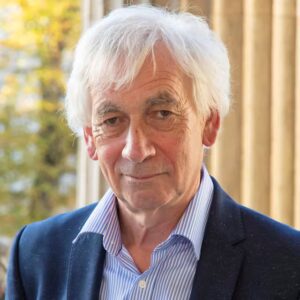
Everyone is intrigued by stories about the origins of the Universe or reflects on the mysterious truths about the space in which our planet revolves. Science provides a framework for finding answers and helps us construct accurate narratives of the Universe. One such science enthusiast is prof. Richard Ellis – astrophysicist and the expert in observational cosmology at University College London (UCL). His interests contribute to mapping the large-scale structure of the Universe, investigating its evolution, and developing astronomical instruments. Ellis knew from the very young age that he is eager to pursue astronomy seriously. In 1971, he obtained his Bachelor‘s degree from UCL, followed by a PhD from the University of Oxford in 1974. The scientist spent 19 years at Durham University, building a large research team dedicated to observing objects and processes beyond our own – the Milky Way – galaxy. Appropriate instruments were developed to support these observations too. In recognition of his essential scientific achievements, Ellis accepted the prestigious position of Plumian Professor at the University of Cambridge in 1993 and became Director of the Institute of Astronomy. This role gave him the possibility to work with data attained from the Hubble Space Telescope and demonstrate how the instrument could be used to study gravitational lensing – a physical phenomenon in which light from a distant object is bent as it passes through the gravitational field of a massive body. Prof. Ellis also was a part of the establishment of the Supernova Cosmology Project, which investigated the accelerating expansion of the Universe using observations of distant supernovas. The leader of that project – Saul Perlmutter – was awarded the 2011 Nobel Prize in Physics alongside other scientists for discoveries related to this research. Ellis subsequently held a professorship in astronomy at the California Institute of Technology (Caltech) and served as Director of the Palomar Observatory. He also contributed to securing international collaboration for the construction of the Thirty Meter Telescope. After spending two years as a senior scientist at the European Southern Observatory (ESO), prof. Ellis returned to UCL in 2017, where he continues his research to this day.
Currently, the astrophysicist‘s research focuses on observing distant galaxies and pushing boundaries of our understanding of the cosmos back to the earliest stages of the formation of Universe. His discoveries are associated with the search of the very first galaxies – those that already existed when the Universe was only a small portion of its current age. In recognition of his successful research into the evolution of the Universe and his contributions to the development of innovative observational instruments, prof. Ellis received the Gruber Cosmology Prize in 2023. He is a Fellow of the Royal Society and a member of the Australian Academy of Science. He was appointed a Commander of the Order of the British Empire (CBE) by Queen Elizabeth II. Moreover, a rare honour is found in the professor’s list of achievements – he is an international member of the US National Academy of Science.
The scientist uses observations of galaxies as tools for investigating cosmology and the evolution of the Universe. Much of prof. Ellis‘s work has paid attention on conducting broader and more comprehensive research using increasingly advanced instruments, drawing both ground-based and space-based facilities. He is actively involved in promoting, designing, and overseeing the development of new spectroscopic instruments. The aim of his research is to construct a scientifically accurate explanation of the Universe‘s evolution, beginning with the cosmic dawn, when the first stellar systems formed, and examining their role in ionizing the rarefied gas in intergalactic space. In addition to this, his work seeks to explain the various physical processes that shaped the kinematic properties and structural morphologies of spiral and elliptical galaxies too. Ellis‘s latest research closely examines the capabilities of the James Webb Space Telescope, which can measure the chemical composition of intergalactic gas in very distant galaxies. These enhancements may be a great help for scientists to detect chemically pristine primordial galaxies emerging from the darkness.