Allergy is a type I hypersensitivity reaction to the environmental antigens that usually cause little or no problem to most people. The house dust mite (HDM) is one of the most important and widely spread allergen sources causing allergy and its related complications, such as bronchial asthma. Recombinant allergens are being used in molecular allergy diagnostics systems and can also be employed in the development of monoclonal antibodies (MAbs). Since the allergen extracts from different manufacturers lack proper standardization regarding to its composition [1], MAbs against specific allergen components can be used for the quantification of allergen components in allergen extracts.
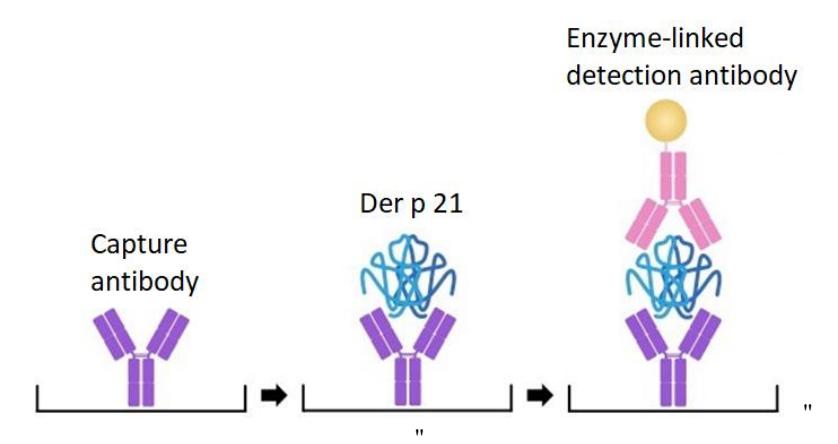
This study aimed to purify recombinant HDM allergens and then develop, characterize and apply MAbs against one of the purified allergens. Here, we studied 9 allergens from HDM Dermatophagoides pteronyssinus and Dermatophagoides farinae, which were previously fused with maltose binding protein (MBP), expressed in E. coli and were purified using affinity liquid chromatography of MBP-passenger proteins. The allergens were Der f 1, Der f 2, Der p 10, Der p 21, Der p 23, Der p 24, Der p 26, Der p 30 and Der p 36. A TEV protease hydrolysis sequence was inserted in between each allergen and its MBP sequence. MBP and TEV also had 6 histidine sequence inserted. Hydrolysis reaction was optimized to detach MBP from purified allergens and one selected allergen – rDer p 21 was purified using second step affinity liquid Ni-NTA chromatography. Blood serum from HDM allergic patients was analyzed and complex formation, between rDer p 21 and IgE (antibodies against native allergens), was observed. These results led to the development of MAbs against purified rDer p 21. Five hybridoma cell lines producing high affinity MAbs of IgG isotype were generated using hybridoma technology [2]. The MAbs were grouped into two categories according to their recognized epitopes and a sandwich enzyme-linked immunosorbent assay (Fig. 1) system for the quantification of Der p 21 was developed and optimized.