
Continuous development of lasers and laser technologies create higher requirements for optical components and thin film coatings. Thin films can be deposited by using variety of methods including physical vapour deposition (PVD), sol-gel techniques, sputtering and chemical vapour deposition. However, with the decreasing size of optics and increasing demand for complex 3D shape optical substrates atomic layer deposition (ALD) became one of the promising technologies that could be used for manufacturing of optical coatings.
ALD is based on the principle of self-limiting sequential chemical reactions between gas-phase precursors and a surface. The self-limiting growth mechanism allows accurate thin film thickness control even on more complex 3D substrates. As ALD is a chemical deposition method, the quality and properties of resulting films are dictated by the precursor and surface reactions [1].
The initial growth rate of layer is a key factor in manufacturing precise ultrathin films whose accuracy define the characteristics of optical coatings. It has been shown that depending on the surface species, on which film is being deposited, the initial growth rate might vary. This variation can be observed during the first 10 to 30 cycles [2]. These variations of growth rate do not have a significant impact on average thickness precision of thicker films. However, while deposition ultrathin films, the variation of initial growth rate can result in apparent discrepancy of final thickness precision.
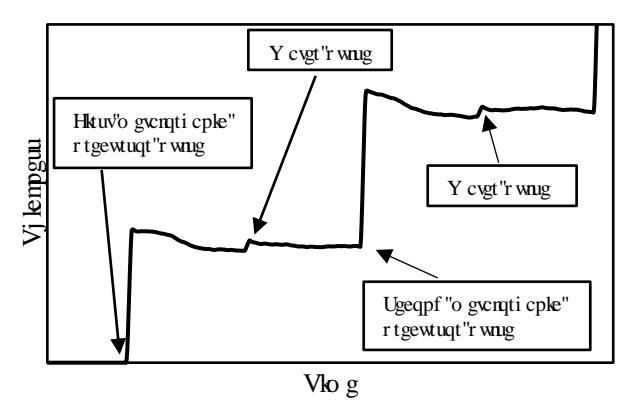
In this work we investigated the initial growth of HfO2, TiO2, Ta2O5 and Al2O3 thin films on various surface species by using ALD thermal process and in-situ quartz crystal microbalance (QCM) monitoring. Each ALD cycle consisted of four steps which were as follows: metalorganic precursor pulse, purge, water pulse, purge (Fig. 1). For this investigation we used metalorganic precursors and deionized water to deposit films at 120 °C and 150 °C.
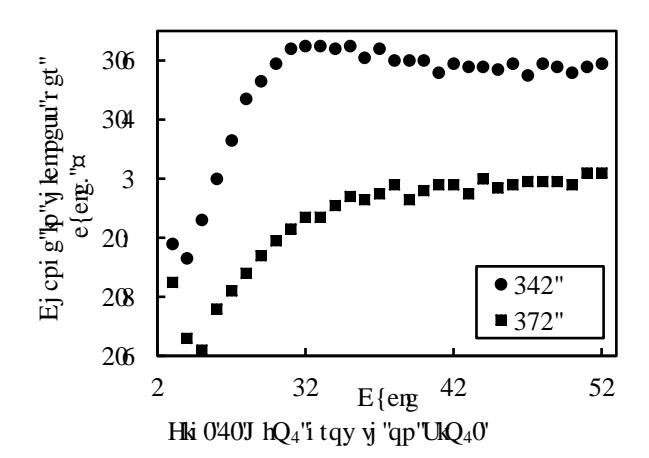
Experimental investigation led to conclusions, that in some cases the initial growth rate can be more than twice lower compared to the stable growth rate (Fig. 2). On the contrary, when deposition Ta2O5, Al2O3 sublayer barely influences the initial growth rate. We found that in most cases linear growth of thin films begins after 10 – 15 cycles.