
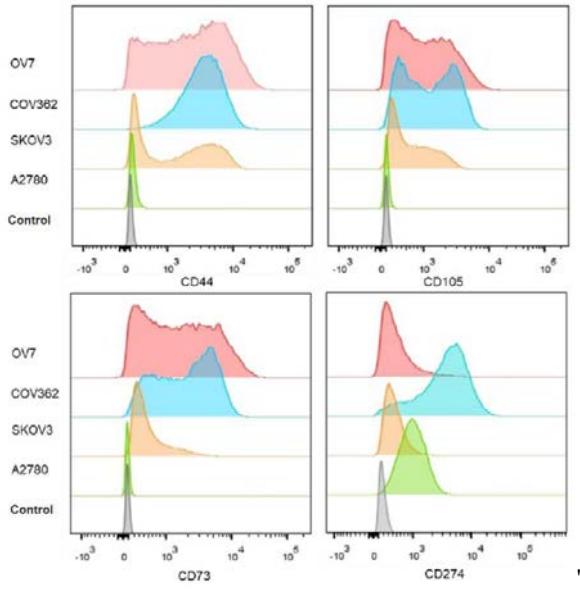
Epithelial ovarian carcinoma (EOC) is a highly heterogeneous and aggressive disease that remains the most lethal gynaecological malignancy. EOC is the most frequent ovarian tumour, distinguished by high mortality in late stages when conventional therapies are no longer effective. The role of the immune system is pivotal for efficient control and destruction of cancer cells. Dendritic cells (DCs) serve as orchestrators of the cytotoxic response of the adaptive arm of the immune system and as such is an attractive target or component of cutting edge cell-based immunotherapies against cancer. DC vaccines have shown promising results in ovarian and several other types of cancers such as melanoma, prostate, lung cancer [1]. Some of the most commonly used are DC-based vaccines loaded with allogeneic cancer cell line lysate, which mimics the tumour present in the patient. Lysates developed from different cancer cell line models of the same tumour might, however, have a dissimilar effect on DC maturation and surface protein expression. That is because different cell lines represent distinct variances of the same disease and, therefore, have different protein constitutions. [2,3]. In our study, we undertook the task of creation of a DC-based vaccine with different ovarian cancer cell line lysates and their mixture to find out whether unique EOC cell lysates have an impact on dendritic cell maturation. We characterised four different EOC cell lines: OV7, SKOV3, COV362, A2780; under standardised culture conditions, by performing flow cytometry (FACS) (Fig. 1.) and analysing 23 immune-related genes expression by quantitive real-time PCR (qPCR). Cytokine array was used to evaluate 105 cytokines concentration in produced cancer cell line lysates later used for dendritic cell maturation. We noted that the four ovarian cancer cell lines differ both in stemness- related CD274, CD44, CD105, CD73 marker expression (FACS), and in immune-related gene expression (qPCR). In agreement, the cytokine array revealed that ovarian cancer cell line lysate profiles are highly diverse.
After cancer cell line characterisation, we successfully produced DCs loaded with different ovarian cancer cell line lysates and their mixture. DC characterisation was performed using FACS, maturation markers: CD11c, CD80, CD83, MHCII were examined. We strongly believe that our findings will lead to development of more potent cell-based immunotherapies for patients suffering from EOC and, possibly, other tumors.