
Renal cell carcinoma (RCC) is the most common type of kidney cancer. Most cases of RCC are discovered incidentally and survival is highly dependent upon the stage of disease at diagnosis, with the late-stage metastatic disease having only a 12% 5-year survival rate [1]. RCC is a highly heterogeneous disease. Clear cell renal cell carcinoma (ccRCC) is the most common and particularly challenging histologic RCC subtype [2]. It is classically associated with a loss of the short arm of chromosome 3p which is regarded as the common earliest genetic event, found in >90% ccRCC patients. This genetic change is seemingly arising in childhood or adolescence, even though cancer may not be diagnosed for another 30-50 years. The deleted region encompasses four tumor suppressor genes: VHL, PBRM1, BAP1, and SETD2 (Fig. 1). Early identification of the disease is highly important because it can impact clinical management. Considering the lack of sufficient non-invasive markers for ccRCC diagnosis, liquid biopsies such as blood plasma could provide an attractive, minimally invasive, and promising method to identify diagnostic biomarkers in ccRCC patients.
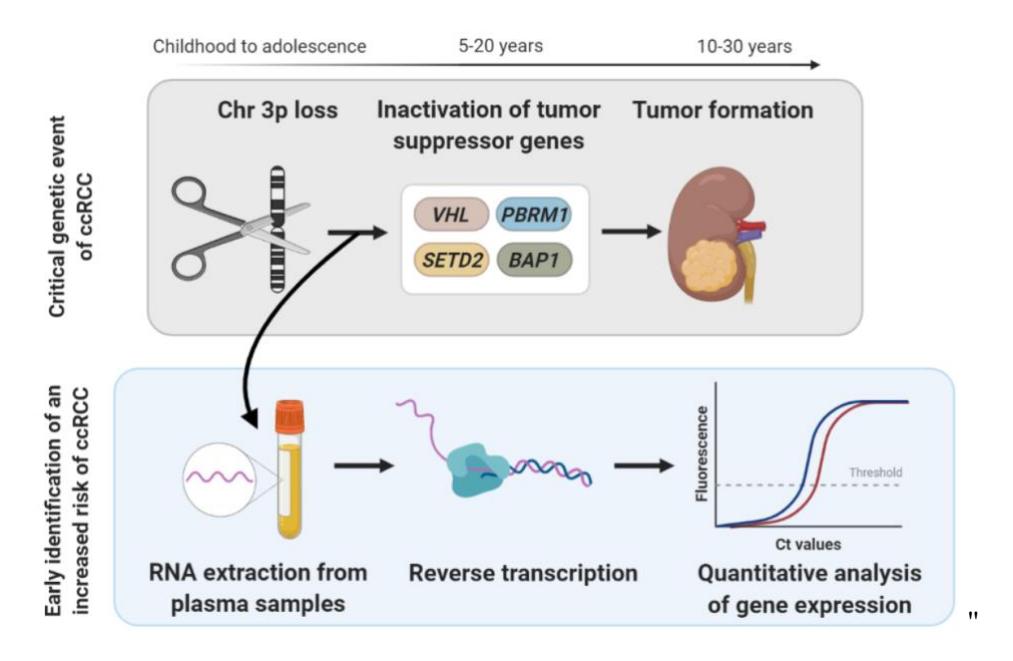
The aim of this study was to determine the changes in the expression of genes VHL, PBRM1, SETD2 and BAP1 in the plasma of patients with ccRCC compared to samples from people with non-malignant tumors in order to adapt them for disease risk assessment and early diagnosis.
In the present study, 9 plasma samples of ccRCC patients and 16 plasma samples from patients with benign kidney tumors were analyzed. Clinical samples were collected during 2019-2021 at National Cancer Institute. Plasma mRNA levels were evaluated using reverse transcription polymerase chain reaction.
The results of our study revealed significant differences in VHL, SETD2, and BAP1 mRNA levels comparing plasma samples from patients with ccRCC and benign tumors (all P <0.05). Gene expression analysis revealed that VHL, SETD2, and BAP1 plasma mRNA levels in ccRCC samples were significantly lower compared to noncancerous cases. Such differences in gene expression may have occurred before the onset of the disease. Early detection of chromosome 3p loss associated with decreased VHL, PBRM1, SETD2, and BAP1 expression would help to identify an increased risk of renal cancer and to provide the most appropriate treatment in a timely manner.
In conclusion, detection of VHL, PBRM1, SETD2, and BAP1 expression changes in plasma samples could help to define the potential of occurring disease and thus guide patient management.