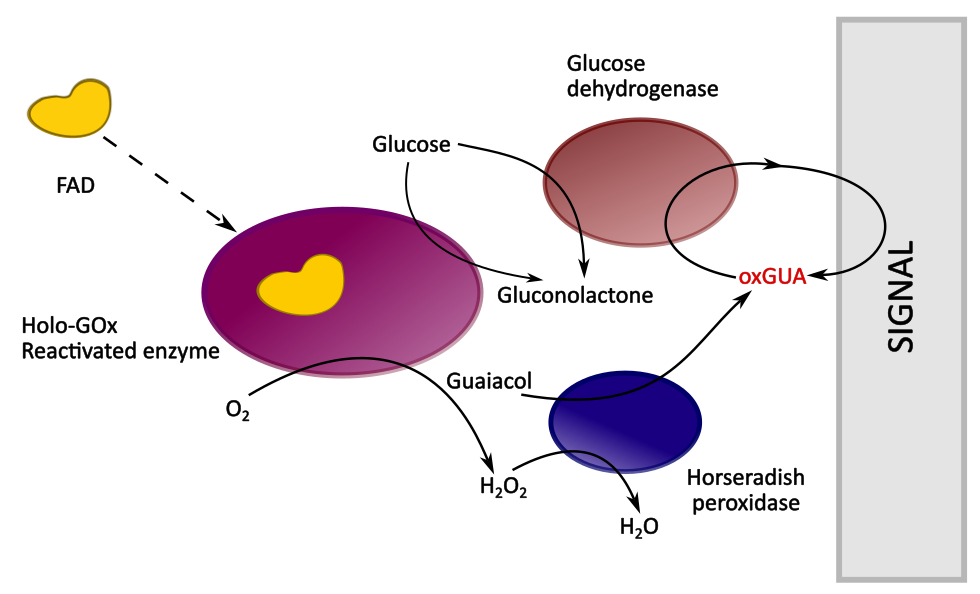
Flavin adenine dinucleotide (FAD) is a crucial redox cofactor involved in various metabolic and enzymatic processes. Accurate detection of FAD is essential for biomedical and biochemical applications, but current FAD detection techniques face challenges such as high costs and require specialized equipment, such as microplate readers. A more affordable and user-friendly biosensing approach is needed to improve FAD monitoring.
In this study, an enzymatic biosensor platform was developed incorporating horseradish peroxidase (HRP), PQQ-dependent glucose dehydrogenase (GDH), and apo-glucose oxidase (apo-GOx) for FAD detection. The biosensor works through a three-enzyme cascade, where FAD reconstitutes apo-GOx into its active form, enabling glucose oxidation and production of gluconolactone and hydrogen peroxide, which is used by HRP and results oxidized guaiacol (oxGUA) production [1]. GDH independently oxidizes glucose, and the electrochemical signal is generated through oxGUA, which serves as a mediator [2]. The biosensors performance was tested using electrochemical techniques, including chronoamperometry and cyclic voltammetry.
This research offers an innovative method for FAD detection, with potential applications in biomedical diagnostics and biochemical research.