
Hsp90 (Heat Shock Protein 90) is a chaperone protein classified under the heat shock protein family, with an approximate molecular mass of 90 kDa. It is widely distributed across various animal kingdoms and constitutes 1-2% of the total protein content in human cells. Hsp90 ensures proper protein folding, stabilizes proteins under heat stress, and facilitates their degradation [1]. In cancer cells, Hsp90 levels are significantly elevated, supporting key processes such as migration, metastasis, proliferation, and other aspects of tumor progression. According to data published by the World Health Organization in 2022, cancer is a leading cause of death worldwide, accounting for approximately 10 million fatalities each year [3]. As a result, Hsp90 has been extensively investigated over the past decade as a potential therapeutic target for both anti-cancer and anti-neurodegenerative treatments [2].
Studies on radicicol, a natural compound that competitively binds to Hsp90, have demonstrated that the resorcinol fragment and its hydroxyl groups are essential for inhibiting the protein’s N-terminal domain, which contains the crucial ATP binding pocket. Further research has indicated that for a drug to effectively bind to Hsp90’s active site, it must feature an aromatic ring near the resorcinol moiety [4].
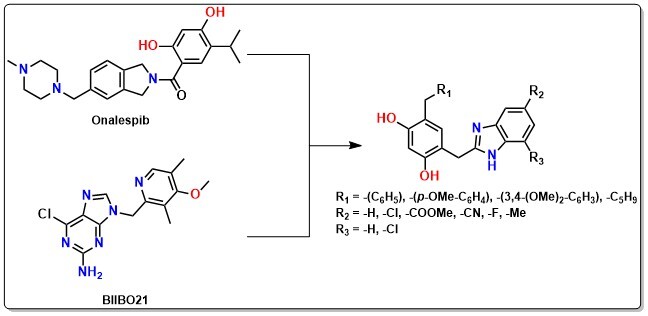
This work aimed to synthesize a range of Hsp90 inhibitors containing a benzimidazole-resorcinol moiety and explore their application in developing potential resorcinol-based Hsp90 inhibitors featuring a benzimidazole moiety. Onalespib, a drug that has already completed phase II clinical trials, as well as structures of other resorcinol-based Hsp90 inhibitors (like BIIBO21), were used as a reference in this work [5]. The presentation will cover the ten-step synthesis process, its challenges, and results.