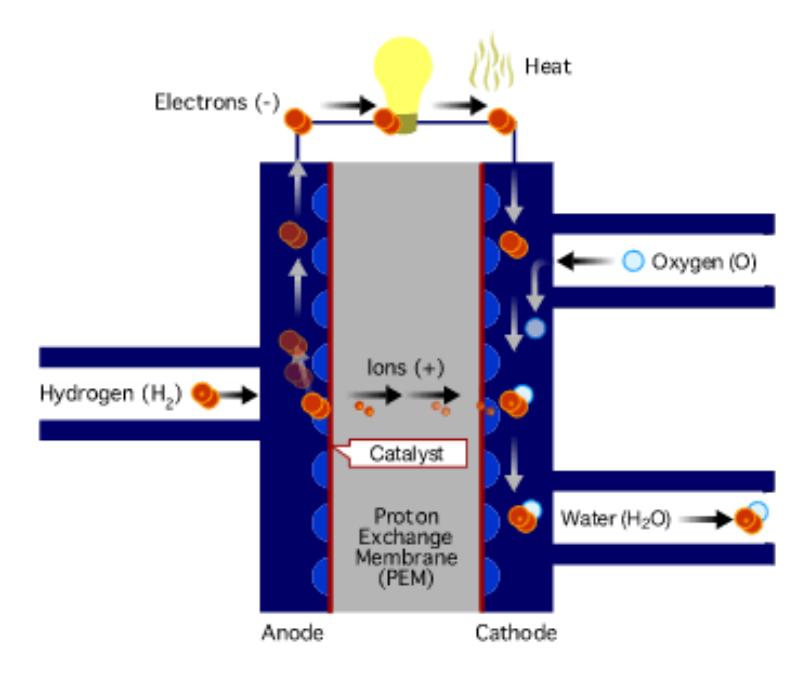
Fuel cell is an electrochemical cell that converts a source fuel into an electrical current and water. This technology is the most promising idea for the future development of world energy systems due to its high efficiency and unique environmentally friendly features, since the only waste product is water vapor and hydrogen is one of the most common element on the earth [2,3].
Fuel cells are very useful as a power sources (Fig.1) and this technology is very likely to successfully replace a contemporary energy sources applied in different areas [5]. However, at the moment there are still some limitations in their applicability. Therefore, this technology is being intensively developed in EU countries, Japan and USA.
This paper gives a general outlook on the fuel cell construction, size and weight, its applications and efficiency. Additionally, the fundamental principles of fuel cell thermodynamics and fuel cell power plant engineering are summarized. Afterwards, the main obstacles in further development of that technology are presented, together with leading ideas of overcoming them. Finally, the hydrogen economy, storage and refueling options are discussed as an important problem associated with any real application of fuel cells in future [4].