
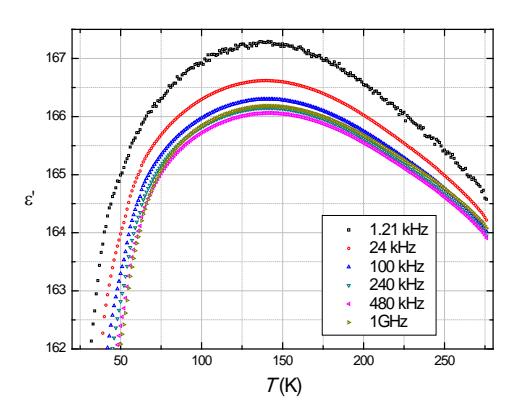
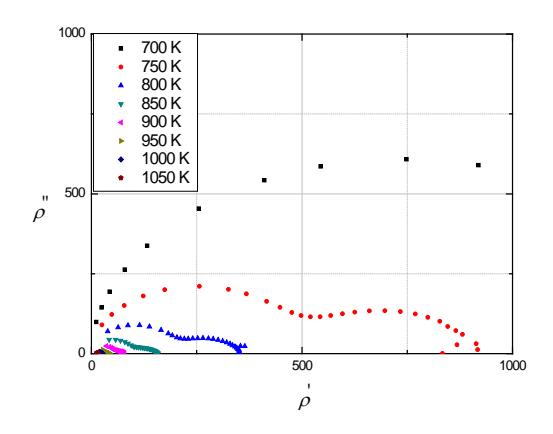
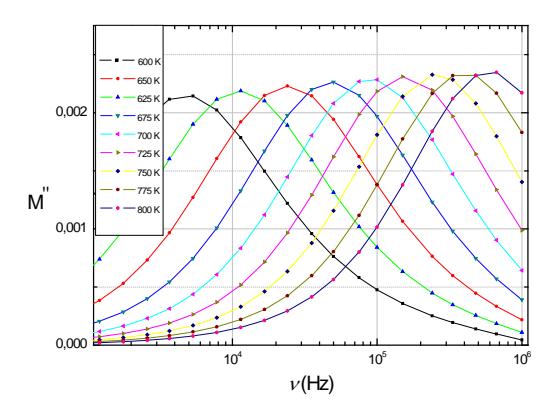
For high memory density device applications using ferroelectrics, ferroelectric materials should have a large remanent polarization, low coercive field, and good fatigue resistance at the same time [1–4]. A ferroelectric Pb(ZrxTi1-x)O3 (PZT) has been considered as a strong candidate for future memory applications because of its superior ferroelectricity [2,4]. However, PZT has a few disadvantages, such as environmentally hazardous lead content and poor fatigue endurance. Although the fatigue properties of PZT capacitor can be significantly improved by using metal-oxide electrodes, these electrodes tend to increase complexity of the fabrication procedure and leakage current [5,6]. Therefore, development of a new lead-free material having a superior ferroelectricity comparable to PZT is essential for these applications [2,3]. Lead-free bismuth-layered perovskite ferroelectrics, such as SrBi2Ta2O9 (SBT) and Bi4Ti3O12 (BIT), have been extensively studied as alternative materials for memory applications [2,7–9]. Most promising candidate at the moment looks like Bi2.5Gd1.5Ti3O12 (BGT), due to the high phase transition temperature. The aim of the present work was to investigate newly sintered ceramics with gadolinium substitution of bismuths by broad band dielectric spectroscopy. Measurements have been performed in the frequency range 20 Hz to 1 MHz and temperature range from 20 K to 1050 K. Obtained results can be divided into two parts: the low temperature part, where the glass like dispersion occurs at very low temperatures – below (Fig. 1) – the real part of the dielectric permittivity decreases with temperature increasing like in dipolar glasses or relaxes; the high temperature part. The high temperature part is dominated by conductivity and due to that the real and imaginary parts of dielectric permittivity increases up to 5.4 × 10⁷. The obtained results have been analyzed in the terms of specific resistance, conductivity, and electrical modulus. The first of all we will discuss conductivity calculation results. The total conductivity follows universal law $\sigma(\upsilon) = \sigma_{\text{DC}}+ A\omega^{\text{s}}$, with $\sigma_{\text{DC}} = \sigma_0\exp(E_{\text{A}}/kT)$. Not to forget that this values are the total conductivity values of the system. To distinguish the grain conductivity from intergrain conductivity the specific resistance has been calculated. The results are presented in the Fig. 2. We can clearly see that we have two semicircles, which can be attributed to the grain conductivity (Higher frequency part) and intergrain conductivity (low frequency part). From the higher frequency semicircle we can calculate the graine DC conductivity at different temperatures. Similar results have been obtained from the electrical modulus representation (Fig. 3).
We can conclude that dielectric spectra of Bi2.5Gd1.5Ti3O12 consist of two parts – low temperature freezing part similar to dipolar glasses and high temperature part dominated by electrical conductivity with sigma dc activation energy 0.9 eV, which most probably is caused by oxygen vacancies in this material.