Classic fluid physics faced an obstacle of limited applicability in real problems. This is because fluid motion is described by the Navier-Stokes equations, which are impossible to be solved with an exception of a few special cases. Moreover, every real situation cannot be reliably described without models of a wide range of complex phenomena such as viscosity, compressibility, boundary layer separation, turbulence, cavitation, fluid free surface, interaction with solid bodies etc. This caused a bottleneck in development of problems including fluid flows, which were examined empirically with the use of rather expensive wind tunnel experiments.
Recently, the growth of computing power available at affordable cost allowed the CFD (Computational Fluid Dynamics) simulations to cause an important breakthrough in fluid physics. Numerical methods provide both research and industry with cheap, fast and reliable information about demanded flow parameters. That led to a numerous successful applications including those regarding environmental protection [1-2].
Described work is devoted to presentation of a wide range of examples of use of CFD in different aspects of environmental protection. It will be shown that these methods provide substantial reductions in waste of energy and natural resources by optimizing flows in many different circumstances.
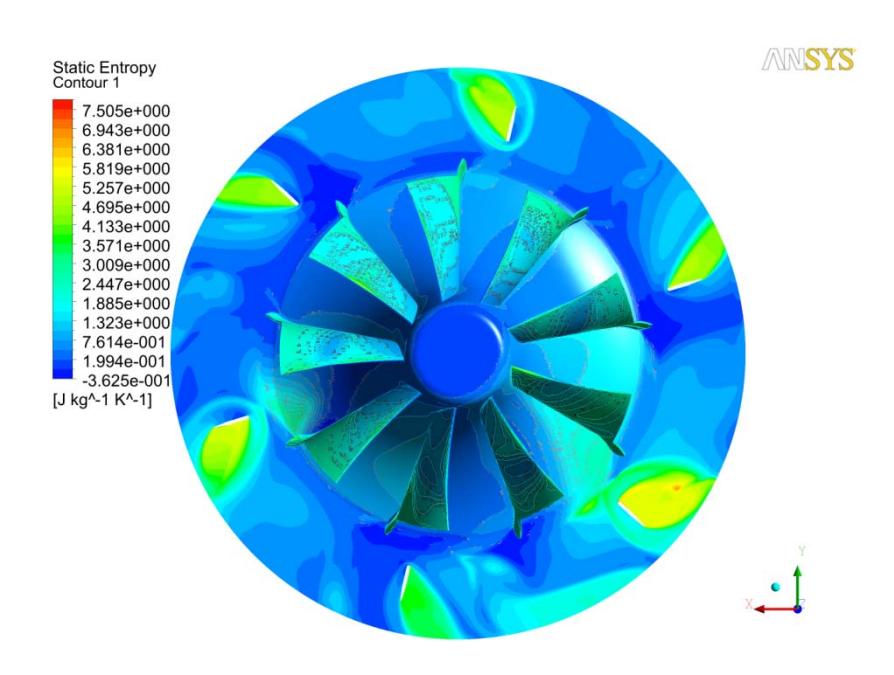
One of examples presented in the presentation regards turbomachines (turbines, compressors, pumps etc.) which are used in every energy system, such as power plant, jet engine, car engine [3].