
Infertility is an increasingly widespread issue affecting around 12% of families worldwide [1]. Various syndromes, such as premature ovarian insufficiency (POI), cause female infertility and diminish the overall quality of patientsĺife. Current interventions, such as hormonal therapy and Assisted Reproductive Technology, are accompanied by various side effects and fail to treat the underlying causes of infertility [2]. In the preceding years, cell-based therapy became one of the new emerging potential treatments for a variety of conditions. The recently found associations between the pathogenesis of POI and the immune system [3] prompted us to choose T cells as the object of our study.
The aim of our study was to investigate peripheral blood cell and T cell potential for infertility treatment in POI mouse model (Fig. 1). During the research, we isolated peripheral blood mononuclear cells (PBMC) from the peripheral blood of the donor and CD4+/8+ positive T cell population using the Magnetic Activated Cell Sorting (MACS) method. Isolated T cells were positive for CD3 (98%), CD4 (72%), and CD8 (74%) cell surface markers and were expanded in vitro with IL-15, and IL-7 cytokines. PBMC or CD4+/8+ positive T cells were transplanted to chemotherapy-induced POI mouse ovaries. POI mice (untreated) and POI mice after PBMC treatment were mated with male mice. The pregnancy rate in both cases was 0%, meaning that mice were infertile. POI mice that received CD4+/8+ positive T cell treatment had restored fertility after mating (pregnancy rate 83%). Following cell treatments, we investigated Antimullerian hormone (AMH) and TNF-\(\alpha\) levels in the mouse serum and the expression of folliculogenesis-associated and fibrosis-associated genes in mouse ovaries and uterus and we found that results showed a positive therapeutic effects on reproductive function via molecular networks and hormonal system and restored fertility in POI mouse model. 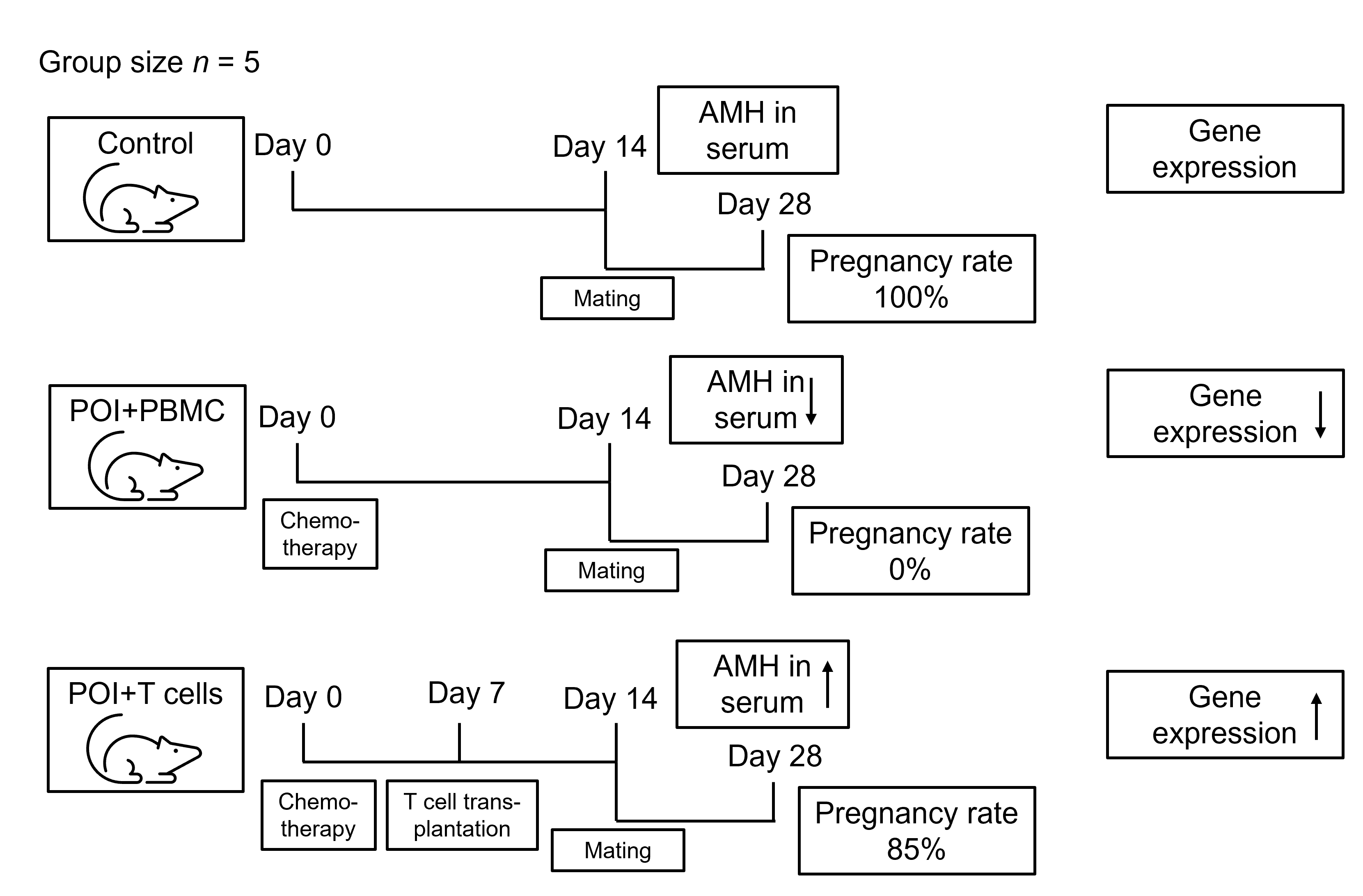
The study was funded by the Research Council of Lithuania (project No. P-ST-23-76).