
Double electron-electron resonance (DEER) spectroscopy, a widely used tool in structural biology, explores biomolecules like proteins, RNA, and DNA by determining nanoscale distances between unpaired electron spins [1]. This pulsed electron paramagnetic resonance (EPR) technique utilizes microwave pulses of varying frequencies. In this process, one electron spin is detected through EPR, while the other one is excited by rotating its magnetization vector (Fig. 1) [2]. Throughout the experiment, we monitor the alterations in dipole interaction between the interacting unpaired electrons. DEER overcomes limitations in studying systems without unpaired electrons, such as biomolecules, by incorporating spin labels through site-directed spin-labeling (SDSL) [2]. Compared to other methods, DEER is not constrained by crystallized molecules or molecular weight limitations. The combination of SDSL with DEER emerges as a highly promising approach for structural analysis, enabling the observation of changes in local structure, interactions with other molecules, alterations in the distance between electron spins, and the visualization of conformational heterogeneity and dynamics [1]. 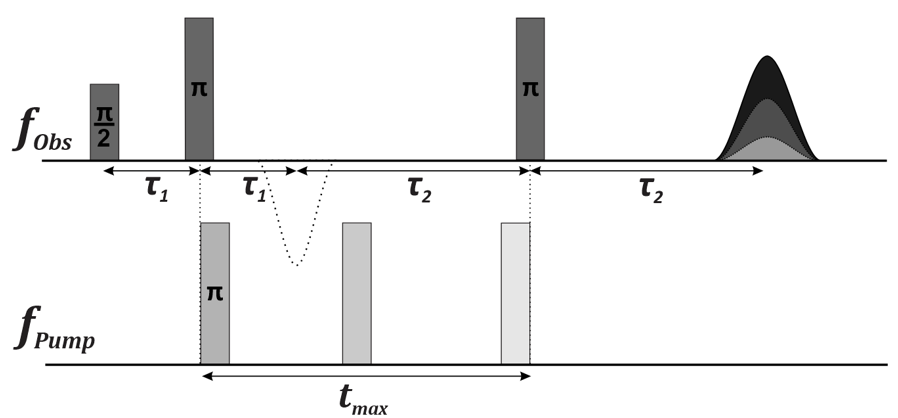
DEER SPECTROSCOPY OF S100A9 PROTEIN
Aistė Peštenytė1, Gediminas Usevičius1, Darius Šulskis2, Ieva Baronaitė2, Vytautas Smirnovas2, Jūras Banys1, Mantas Šimėnas1
1 Faculty of Physics, Vilnius University, Saulėtekio al. 3, LT-10257, Vilnius, Lithuania
2 Sector of Amyloid Research, Institute of Biotechnology, Life Sciences Centre, Vilnius University, LT-10257 Vilnius, Lithuania
Fig. 1. Microwave pulse sequence of the DEER experiment.
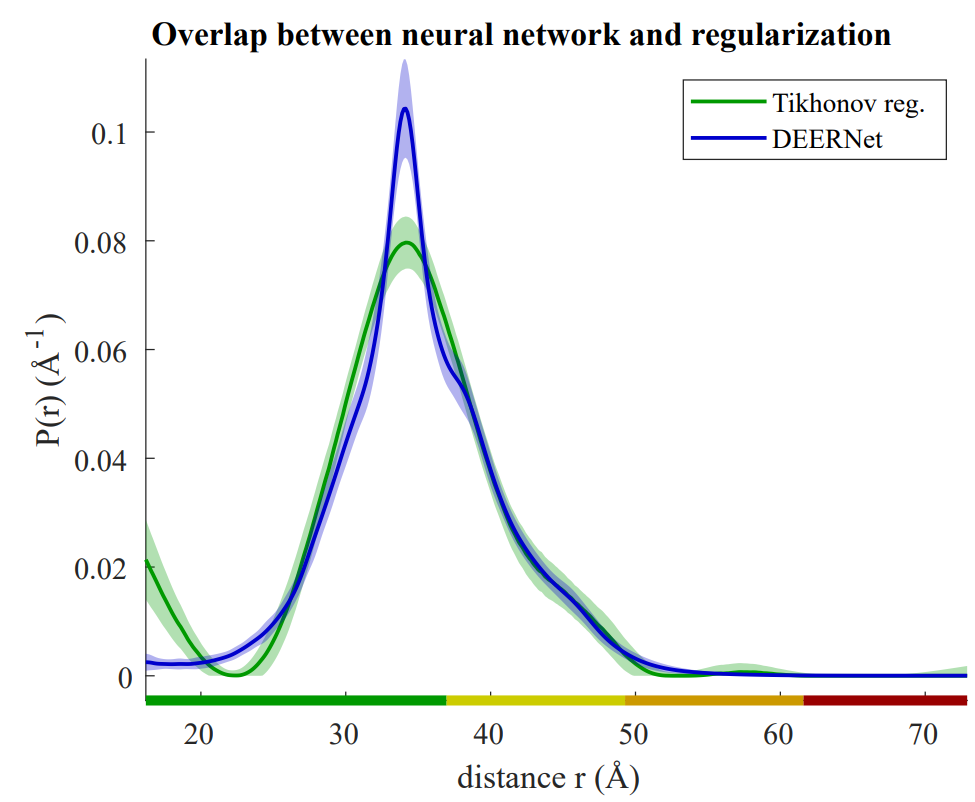
Fig. 2. Distance distribution between electron spins in the S100A9 protein.
[1] Indra D. et al., Use of electron paramagnetic resonance to solve biochemical problems, Biochemistry 2013.
[2] Jeschke G. DEER distance measurements on proteins. Annual review of physical chemistry. 2012 May.