Electron paramagnetic resonance (EPR) is a powerful technique used to study and manipulate electron spins in various compounds ranging from functional materials to proteins. Recently, major advances in EPR sensitivity were achieved using planar superconducting microresonators \(^{1,2}\). However, microresonators fabricated from low-temperature superconductors have severe limitations for conventional EPR due to their low temperature of operation and susceptibility to the external magnetic field. For this reason, microresonators fabricated from high-T\(_{C}\) superconductors are gaining attention.
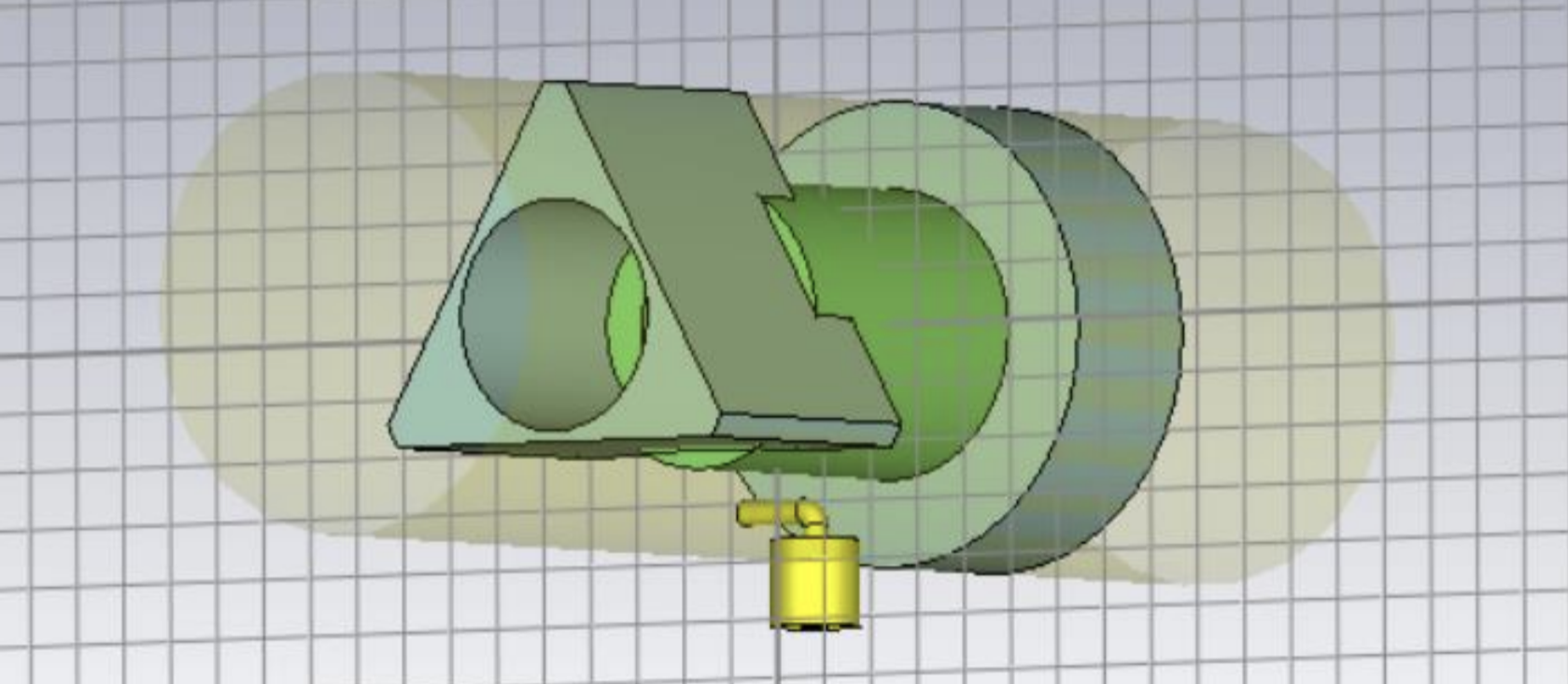
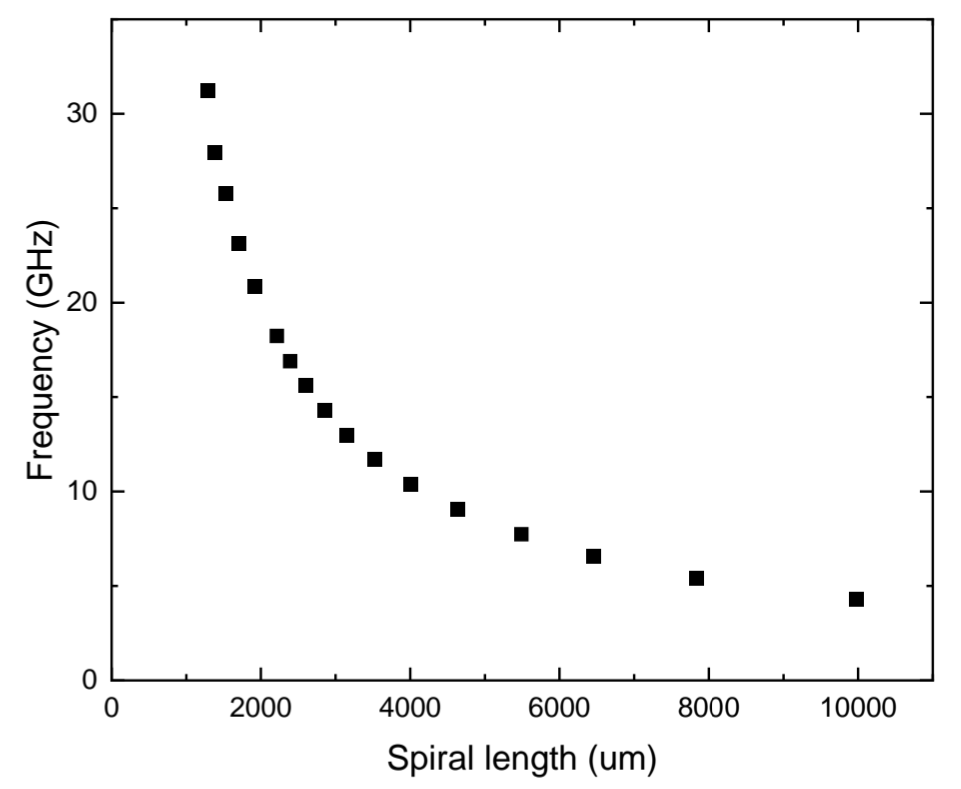
Here, we use CST Microwave Studio computational electromagnetics tool to simulate microwave coupling characteristics of a planar EPR spiral microresonator coupled to an antenna via a Bruker MD-5 dielectric ring resonator (Fig. 1). First, we investigate the effect of the microwave antenna on the coupling strength to Bruker MD-5 resonator. After finding the overcoupled position, we explore the characteristics of a planar EPR microresonator on its position and rotation in the dielectric resonator. We also explore the dependence of the frequency of a spiral resonator on its length, while coupled to a co-planar waveguide and the Bruker MD-5 dielectric ring resonator. We compare our simulation results with the experimental observations and further discuss the best coupling geometry.