The escalating pace of urbanization has increased the demand for clean and sustainable energy resources. Within this context, the plant microbial fuel cell (PMFC) emerges as a promising approach for power generation from plants. In a PMFC configuration, living plants are intricately integrated into the anode of the microbial fuel cell, where bioenergy is generated through microbial activity acting upon plant root exudates [1].
To obtain possibility to observe and analyze biological processes, we can use artificial root nodule. Similar to natural root nodules, artificial root nodule structure creates a localized hypoxic environment and supports N2-fixing symbiotic bacteria, facilitating the biological fixation of atmospheric nitrogen [2]. This artificial organic system can effectively generate solid biomass as a natural fertilizer in the presence of additional renewable energy [3].
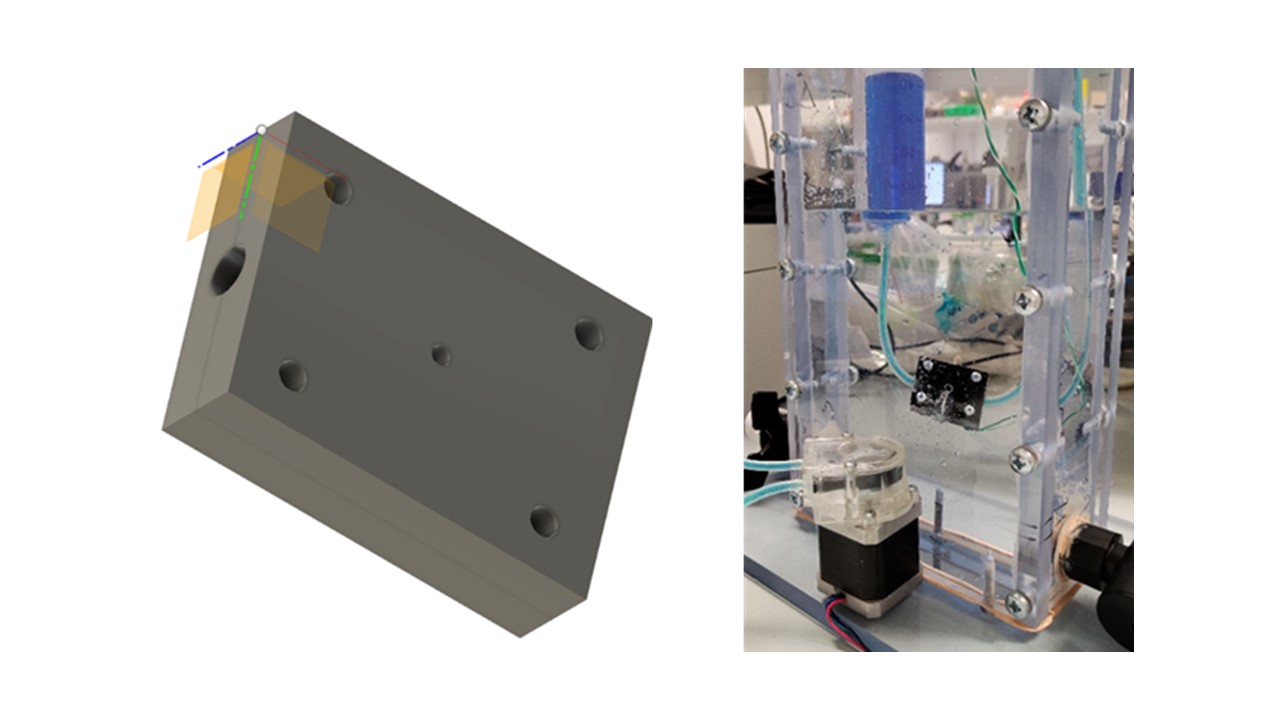
In this study, we aim to fabricate synthetic root structures (Fig. 1) combined with microbial cultures, subsequently cultivating these constructs in a manner akin to microbial fuel cells (MFCs). This approach requires the incorporation of artificial roots designed to mimic the biological interface of plant roots with microbial communities. The microbial culture introduced to these synthetic root systems serves as a surrogate for the natural rhizosphere, establishing a controlled experimental setup conducive to investigating electrochemical processes analogous to those observed in MFCs. By adopting this artificial root-based framework, we hope to mimic how real plant roots interact with microbes in the soil and understand the electrochemical dynamics involved in bioenergy generation.