
The combination of new underwater technology as remotely operating vehicles (ROVs), high-resolution video imagery, and seafloor mosaics creating provides new opportunities for marine geological or biological studies. While these underwater techniques are now well-engineered, there is still a lack of methods for the automatic analysis of the acquired image data. Such data are mostly analysed manually at present, which is a very labour-intensive and time-consuming task [1].
Research was started to create video mosaic image analyses methods, which would reduce time-costs and human labor and increase precision in obtained data.
Mosaic is made from individual video frames merged together through similar points [2]. That creates problems in image color and contrast integrity. SCC (Segmentation, Color and Contras correction) algorithm was made to divide image in to segments and adjust color and contras each frame separately (Fig. 1).
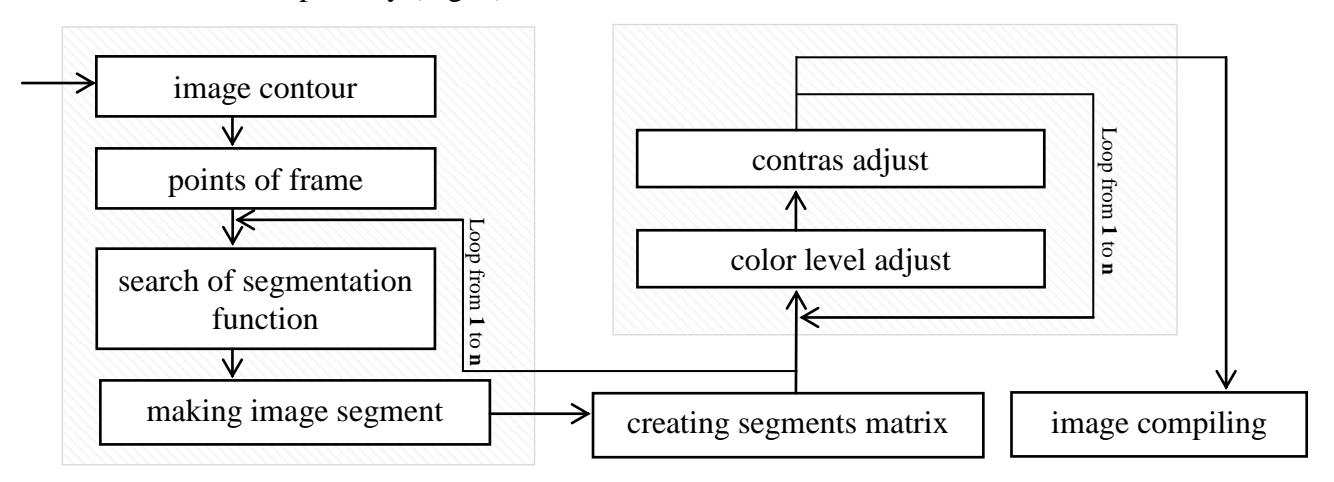
This segmentation method is based on searching and detecting two video frames connecting points on image and calculating function between them. Frames connecting points' detection works only with standard video mosaic forms. Functions are lines separating individual segments.
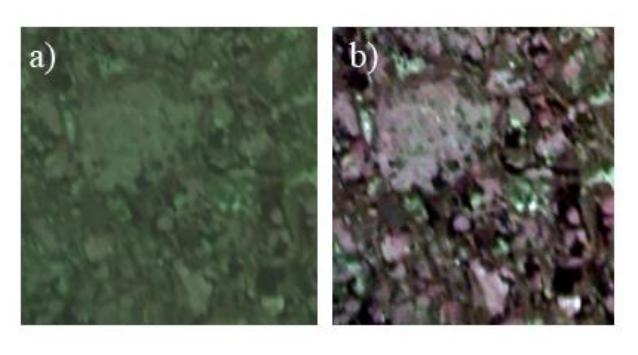
Underwater images typically wind up looking far more green or blue and less red as we move away from the object being imaged. [3]. So SCC algorithm color correction method nearly removes water effect from video mosaic by adding red and subtracting green or blue colors (Fig. 2.). Method will be improved adding color intensity leveling algorithm.
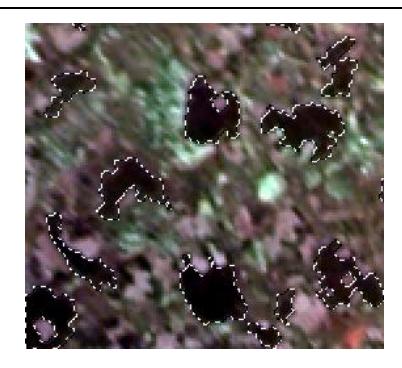
Video mosaic is usually analyzed manually, and obtained data isn't accurate. So there was created identification method witch is semiautomatic, based on color tolerance and made on PhotoShop (PS) as it's plug-in. Object color interval is define manually using PS tool – "magic wand" and its' tolerance parameter. It is easy to fine objects' color specter and won't need to create a pattern before image analyze as it is usually used in identification software [4]. After defining one object software finds all similar color objects (Fig. 3).
Using SCC algorithm can increase image color contras and quality very noticeable and help to analyze video mosaic more accurately for human and computer software. Semiautomatic image analyze saves time and obtains better quality data. Also it not requires preparation (making patterns) for image analyzes.