Probably everyone has heard about quantum computers [1]. Using a quantum computer we can do things which are unimaginable or at least very counter-intuitive to perform in classical world. The very famous examples are: Shor's algorithm and quantum teleportation [1]. Shor's algorithm solves a problem of finding prime factors of an integer N in time polynomial in log(N), whereas classical counterparts work in sub-exponential time. This task is not only of interest to mathematicians but is vital in modern cryptography (e.g. RSA algorithm used for public-key cryptography is based on the difficulty of factoring large numbers). In case of quantum teleportation, quantum entanglement is harnessed to transfer qubits (basic units of quantum information) from one location to another. This issue seems to be very difficult to resolve because a qubit, unlike a classical bit, is not either 0 or 1 but rather a superposition of 0 and 1. Surprisingly, it turns out that sending only a few classical bits one can transfer a qubit.
To build a quantum computer one must be able to prepare appropriate input states and measure obtained output states. Quantum tomography [1,2] helps to tackle a problem of measuring and reconstructing quantum states. Here, reconstruction of a quantum state with density matrix $\rho$ means a process of measuring the state in different bases and proposing a density matrix $\rho_{rec}$, which describes $\rho$ best. To use quantum tomography, one needs to optimize the methods of reconstruction, because in a real experiment there is only a finite number of copies of system to be measured and time for carrying out the experiment is limited, too.
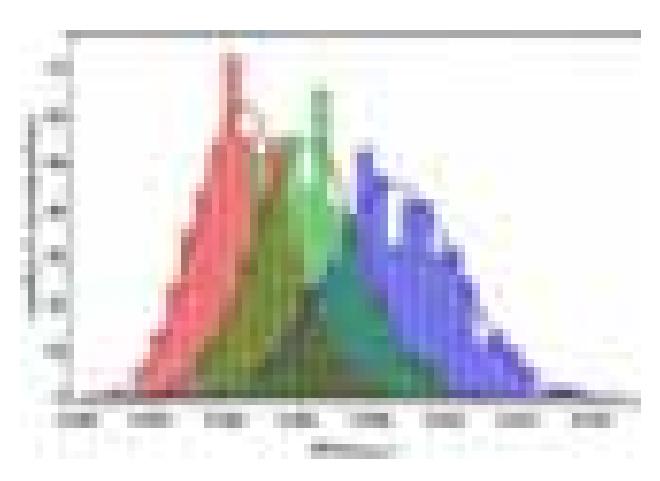
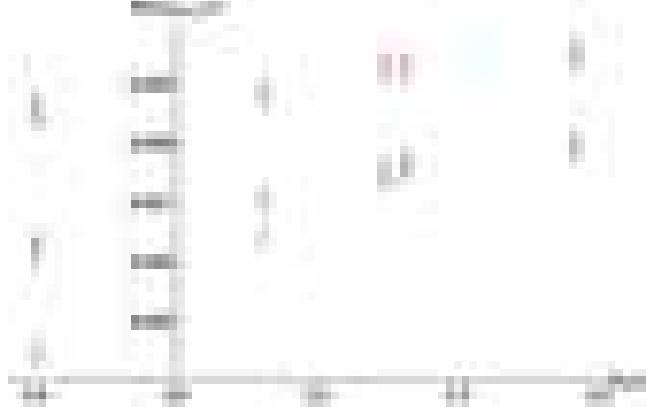
In my bachelor's thesis research I considered different methods of reconstructing density matrices of 2-qubits states: the Pauli Matrices method (PM) [3], the Maximum-Likelihood method without constraints (ML) and the Maximum-Likelihood method with constraints (ML+) [4]. I compared the quality of reconstructions obtained by these three methods for arbitrarily chosen density matrices. The quality of reconstruction was defined as a distance $dist(\rho,\rho_{rec})$ between two matrices – the one I wanted to reconstruct $\rho$ and the obtained result $\rho_{rec}$, where the distance was a Hilbert-Schmidt norm of $\rho - \rho_{rec}$. Then I checked if observed differences had any statistical significance to be able to conclude which method gave better results (typical results are shown in (Fig. 1)). Furthermore, I also verified how the quality of reconstruction depended on von Neumann entropy [1] of the reconstructed state (Fig. 2), where von Neumann entropy for $\rho$ is defined as $Tr[-\rho\ln(\rho)]$ .