
Hybrid organic-inorganic layers of V-606, P-TPD, S-100 with ZnCdS were formed on ITO glasses by spray and spin coating methods and their absorption spectra and photoelectric properties were investigated.
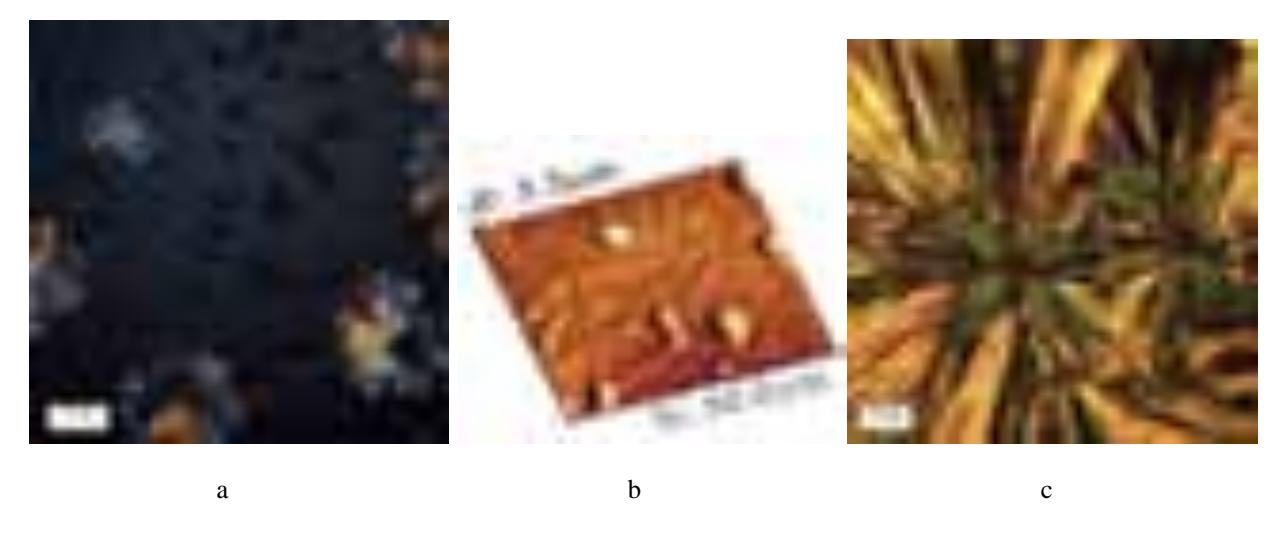
Sprayed liquid tended to create spherical cap shape rather than forming thin wet layer. Full crystallization of hybrid layer with 150 mg/cm3 concentration of solution occur in 10 min. Less concentration of solution makes the process of crystallization longer. Wet layer solution was formed with thicker layer (10 μm) but during the process of drying the layer formed into porous surface which makes similar electrical properties to cap shape surface.
Spin-coated layers are even-surfaced (10%), stable and effective electrically and mechanically. Crystallization is local which ordinary starts from crystallization centre.
Both of the methods for formation of single layer demand similar duration of work. Spray coating layer formation is more effective with more samples and large-squared layers and spin-coating makes small but even and electrically better layers.
Measured optical absorption spectra of hole transport materials with different concentration and ZnCdS saline granules. The volt-ampere characteristics of different compound layers were measured. In the hole drift mobility, carrier lifetime and other interesting parameters was estimated.