
Salmonellosis is one of the most common food-borne diseases in the world. Foods commonly involved in transmission of Salmonella spp. include eggs, meat and meat products, unpasteurized milk, raw poultry, fresh vegetables and fruits. The major existing technologies for food preservation have various shortages, for example, thermal effects, which usually induce different physical and chemical changes in the food. In this context, modern light technologies, including high power pulsed light and photosensitization might serve as promising antibacterial tools. Therefore, the aim of this study was to evaluate the susceptibility of resistant Gram (-) food-borne pathogen S. enterica to photosensitization and pulsed UV light.
Photosensitization is based on interaction of three indispensable components: photosensitizer, light and oxygen. There are two mechanisms by which photosensitizer can react with biomolecules, and eventually induce unrepairable injuries and cell death: Type I radical-based reactions and type II – oxidation-based reactions [1].
Pulsed UV light (200–1,000 nm, maximal emission at 260 nm, pulse duration $t=112 \mu s$, frequency 5 Hz, power of each pulse ranges from 0.07 to 0.9 MW) is FDA approved technology for decontamination of food or food-related surfaces. The main target for this UV-light based treatment is bacterial DNA [2]. Formation of unrepairable pyrimidine dimers influences transcription and replication processes and is lethal injury for bacteria.
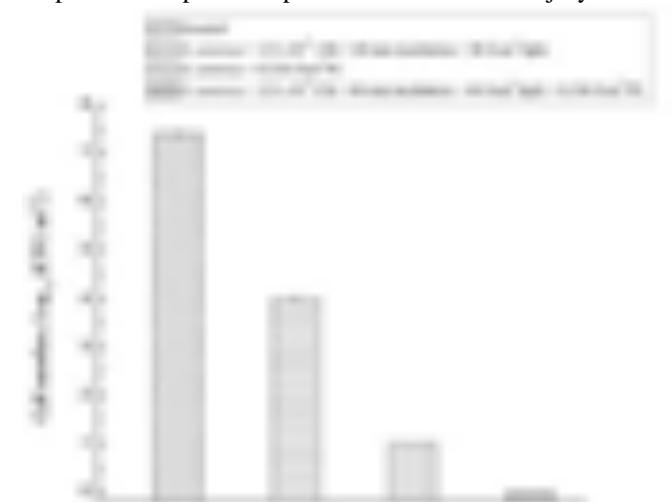
According to our data, Salmonella enterica due to complicated structure of cell wall is resistant to photosensitization treatment, but might be effectively inactivated by pulsed light. Combined treatment of pulsed UV light and photosensitization diminishes bacterial counts to undetectable level and enables to reduce the exposures of both treatments what is very important developing hurdle technologies. Moreover, no regrowth of bacterial culture was observed even at 12 h after combined treatment of photosensitization and pulsed UV light. Thus, our results confirmed that combining photosensitization with pulsed UV light might be effective tool to combat Gram (-) bacteria S. enterica in environmentally friendly way.