Classic studies of organic luminescence are generally conducted in the solution state. However, the conclusions drawn from the dilute solution data cannot commonly be extended to the concentrated solutions, because many organic luminophores show very different light-emitting behaviors in dilute and concentrated solutions. For example, luminescence is often quenched in high concentrations. This effect is called aggregation-caused quenching (ACQ) and considered detrimental from the viewpoint of technological applications as solid state materials are usually used. This is why luminogenic materials with attributes of aggregation-induced emission (AIE), an opposite effect to ACQ, have attracted much interest since the debut of the concept in 2001. AIE effect allows actively utilizing the aggregation process, instead of working against it [1]. Almost all organic luminophores are singlet emitters. Since luminophores fluoresce, its' electroluminescence quantum yield can only be as high as 25%. Therefore it is of great interest to study triplet organic emitters because these emitters could enable efficiencies quadruple that of fluorescent materials [2,3].
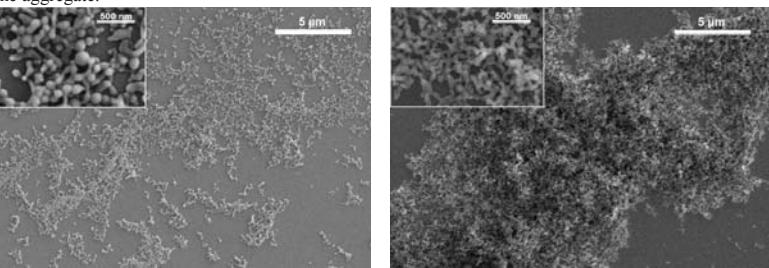
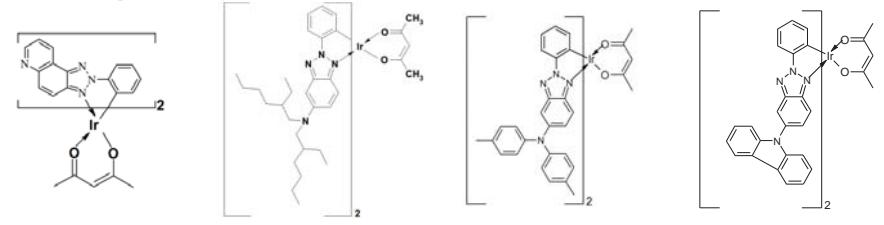
Nanoaggregates formed from triplet emitters were studied in this work. Precipitation technique was used to form phosphorescent organic nanoaggregates from four different organometallic iridium compounds (Fig. 1). Precipitation technique is based on three simple steps. Firstly, the solution with THF is prepared, and then different volume fractions of distilled water are injected into the solution under vigorous stirring. Since the luminophores dissolve in THF but are hydrophobic while THF is soluble in water, aggregates start to form in the solution after the percentage of water reaches a certain value. Nanoaggregates were also formed using 1,4-dioxane and acetonitrile mixture as organic solvent and ethanol instead of water. Nanoaggregates were characterized by measuring photoluminescence of both solutions and evaporated layers of solutions. Pictures of nanoaggregates were taken by using fluorescence microscopy and scanning electron microscope (SEM) (Fig. 2).
Results have shown that different H type, J type and amorphous aggregates form depending on the structure of the molecule. It was shown that the type of solvent mixture, that was used to form aggregates, influences final shape and size of the aggregate.