Carbonic anhydrases catalyze the reversible hydration of carbon dioxide to bicarbonate and participate in diverse physiological processes. In humans, 12 CA isoforms possess catalytic activity. They differ from each other in tissue localization and cellular distribution. CAVI is the only secreted isoenzyme of human CA family. It has common roles of CAs as pH regulation in saliva, antireflux defense and has a protective effect in stomach and oesophagus. Gene comparison tells that CAVI is closely related to the two membrane associated isoenzymes CAIV and CAIX. CAIV is a drug target for several pathologies, including glaucoma (together with CAII and CAXII), retinitis pigmentosa and stroke [1]. CAIX is a marker for hypoxic tumors. This association links CAVI with certain cancers which might be associated with salivary glands [2]. CA isoforms are therapeutic targets for inhibition to treat diseases. Sulfonamide-based compounds, such as ethoxzolamide (EZA), appear to be effective in inhibiting CAs. However, it is important to find isoform-selective compounds.
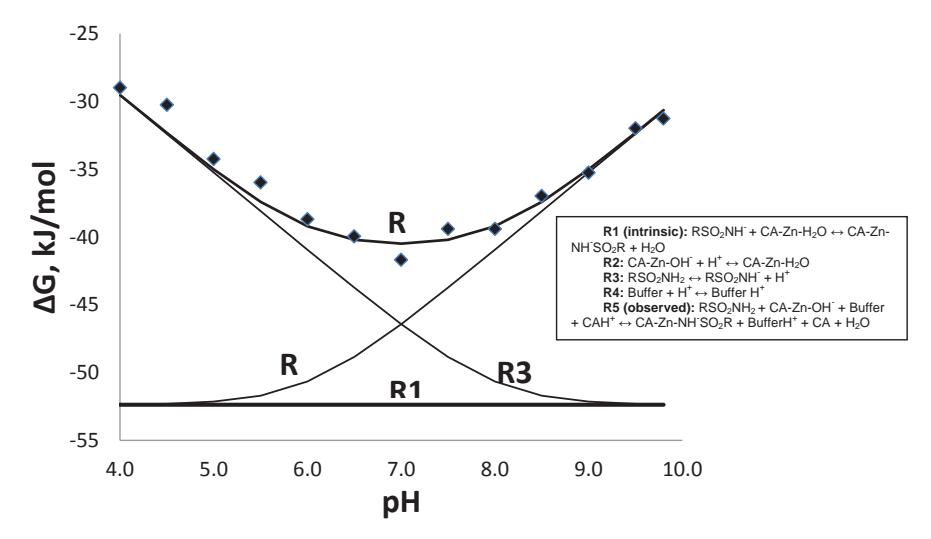
In this work, EZA binding to CAVI was analyzed by fluorescent thermal shift assay (TSA). TSA is a rapid screening method for the identification of binders and requires low amounts of protein. CA inhibitor binding is linked to several protonation-deprotonation reactions. These linked reactions strongly affect the observed thermodynamic parameters of binding and often do not correlate with the intrinsic parameters. Only the intrinsic parameters should be used for compound structure–activity relationship analysis [3].