
Nanoplatelets or colloidal quantum wells with strong one-dimensional confinement are the most recently discovered class of semiconductor nanocrystals composed of cadmium chalcogenides. They were shown to exhibit optoelectronic properties that are superior to those of respective quantum dots or nanorods, such as extremely narrow absorption and photoluminescence bands, large linear and two-photon absorption coefficients, high electooptical response, low lasing thresholds etc.
However implementation of semiconductor nanocrystals for practical applications generally requires overcoating them with a shell composed of other semiconductor materials with wider bandgap. Such overcoating passivates dangling bonds on the particle surface thus increasing radiative recombination rates, protects nanocrystal cores from the environment and enhances their photo- and chemical stability. Shell deposition on cadmium chalcogenide nanoplatelets is quite challenging, since traditional approaches for overcoating fail in their case and alternative approaches are more sophisticated and less reliable.
It this work we report novel convenient and scalable procedure for overcoating CdSe nanoplatelets with $Zn_xCd_{1-x}S$ (x = 0 - 1) shells using single-source precursors – Zn or Cd diethyldithiocarbamates and study the morphology, structure and optical properties of obtained core-shell heteronanoplatelets (Figure 1).
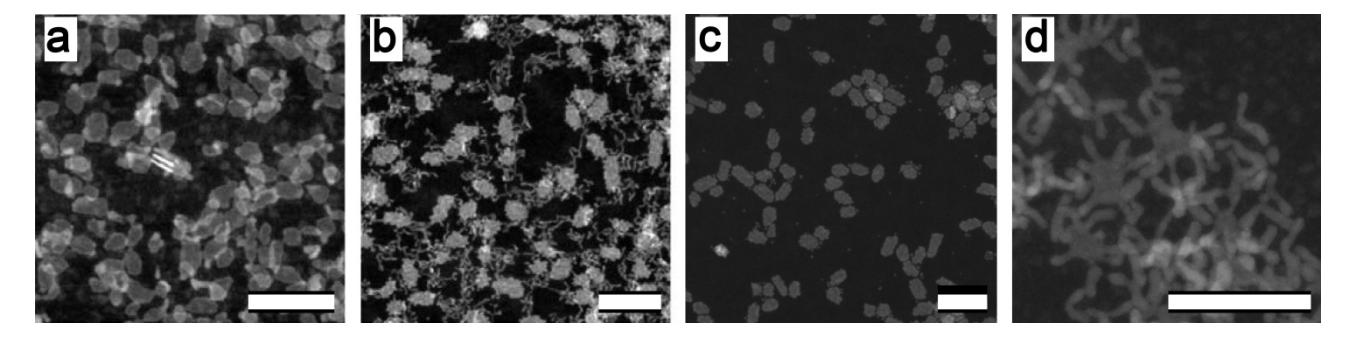
Using transmission electron microscopy, X-ray diffraction, Raman and optical spectroscopy we investigate the effect of shell composition and related strain at the core-shell interface on the shell morphology and optical properties of final heteronanoplatelets. We demonstrate that among studied materials due to the combination of structural and electronic factors ZnCdS shells provide the best passivation of nanoplatelet core thus yielding CdSe/ZnCdS two-dimensional core-shell heterostructure with the photoluminescence quantum yield of ~ 60%.
Additionally we introduce a method for the preparation of novel nanocrystals with mixed dimensionality – 2D-1D CdSe/CdS heteronanoplatelets formed due to the inherent zinc blende-wurtzite polytypism of cadmium chalcogenides that can be manipulated by the type of ligands present in the reaction mixture. Such CdSe/CdS heteronanostructures exhibit enhanced light absorption in ultraviolet and blue regions that can be modulated by the length of 1D-branches. Such structures can be considered as promising materials for luminescent solar converters and concentrators or photocatalysts with directional electron transport.