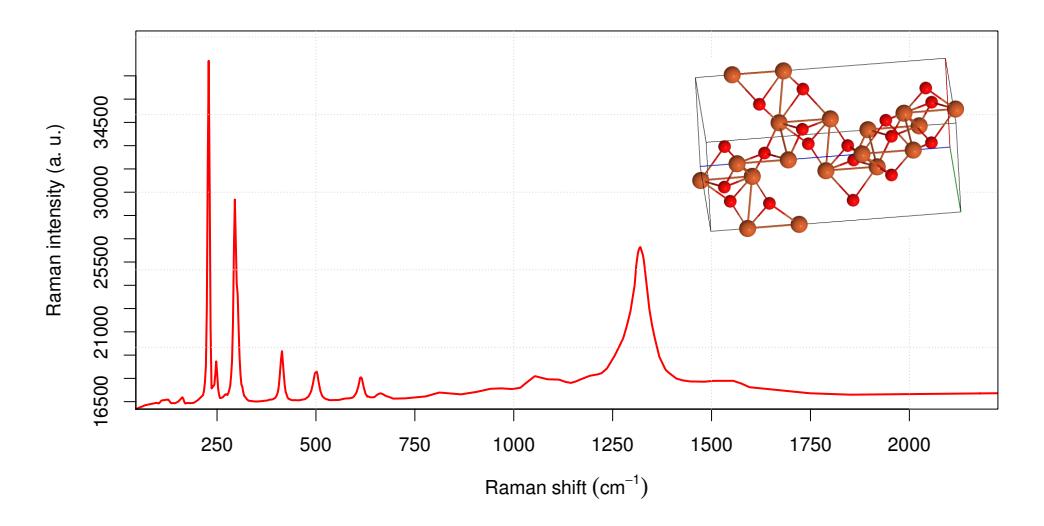
One of the main driving forces behind modern day scientific research is openness. As a result, open-access data repositories play an increasingly important role in the scientific community. The Crystallography Open Database (COD, http://www.crystallography.net/cod) [1] is one such resource – over the last 15 years it has become the largest curated and validated open-access collection of inorganic and non-polymeric organic crystal structures encompassing over 390 000 entries. More than 155 000 of these entries have been enhanced by manually adding the SMILES descriptors and as a result enabling the substructure search within the given subset. Recently, a number of computer programs capable of automatically determining stoichiometrically [2] and chemically sound molecules from the crystallographic data have also been developed; this, in turn, enabled the automated generation of structural formulae descriptors and eased the establishment of cross-links between the COD and other open-access resources such as PubMed, DrugBank and Wikipedia. New strides have also been made in relating spectral data to their corresponding crystal structures. The COD was chosen as the back-end database in the wide scale on-site sample analysis of the "Sonic Drilling coupled with Automated Mineralogy and chemistry On-Line-On-Mine-Real-Time” (SOLSA, http://www.solsa-mining.eu) project that focuses on developing highly efficient, cost-effective and sustainable exploration technologies. Since part of the sample analysis involves material identification via the means of Raman spectroscopy, reference spectra aggregation from various sources was initialised choosing CIF [3, 4] as the homogeneous data carrier format for both XRD and spectral data; this, in turn, stipulated the development of spectroscopy oriented DDLm dictionary [5] and the creation of the Raman Open Database (ROD, http://solsa.crystallography.net/rod). These new developments will allow the SOLSA project to present various aspects of mineral characterization such as Raman spectra, XRD structures and fluorescence data in the COD database in a uniform, computer-readable way.