Exoplanets are the planets which orbit the stars other than Sun. So far, we detected 3741 such planets with various methods (exoplanet.eu catalogue). Hot Jupiters are the first exoplanets discovered by transit and radial velocities methods because of their large radii, high masses and short periods up to several days. Studying Hot Jupiters using transit method (photometric and spectroscopic) we can determine the orbit parameters, the size of the planet, temperature and the chemistry of the atmosphere.
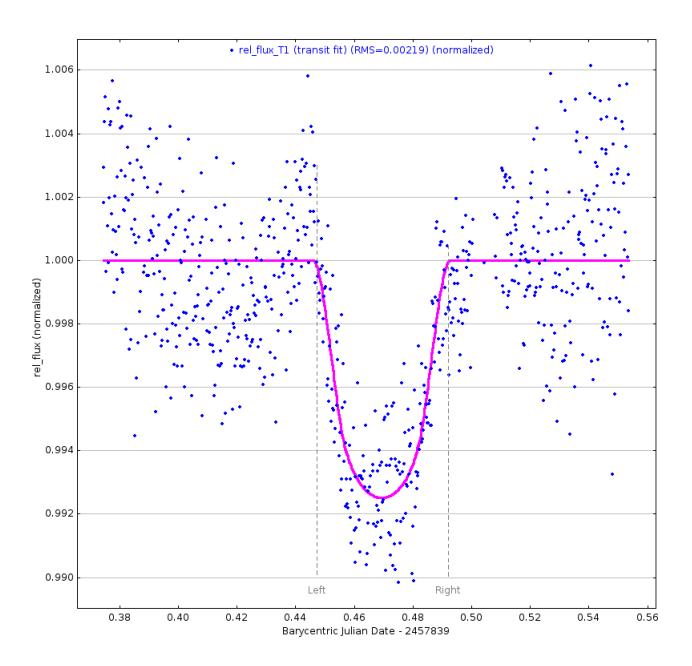
In my presentation I will to show the transits of the hot jupiters: GJ 436b, WASP-3b, KELT-1b, KELT-3b. Those exoplanets were observed throughout full transits during the nights in 2017 and 2018 using a CCD camera mounted at the 60 cm Cassegrain reflector at the Centre for Astronomy in Piwnice near Torun, Poland.
Because of the close orbits of the Hot Jupiters there is possibility that the star leads the tidal distortion of the planet. Having the high precision light curves and determine the orbit paramiters, size and period of the hot jupiters we can check if the star affects the planet.
All data reduction was carried out using the AstroImageJ (AIJ, Collins et al. 2016).