
In recent years fruits and vegetables have been increasingly implicated as 2nd leading cause of foodborne illnesses [1]. Thus, existing decontamination technologies for microbial control are not enough effective.
In this context photosensitization seems promising. It employs a photosensitizer which preferentially associates with microorganism and after activation with visible light of appropriate wavelength generates around reactive oxygen species (ROS) which induce lethal damage of microorganism [2].
The present investigation was undertaken to evaluate the effectiveness of Chlorophyllin-based photosensitization for microbial control of fresh produce, i.e. cocktail tomatoes.
Data presented in Fig. 1A indicated that after illumination of Chl-soaked tomatoes with LED-based light (405 nm (light dose 3 J/cm2) microbial contamination reduced by 2.4 log (99%), whereas the population of Listeria reduced by 1.5 log (95 %) (Fig. 1B).
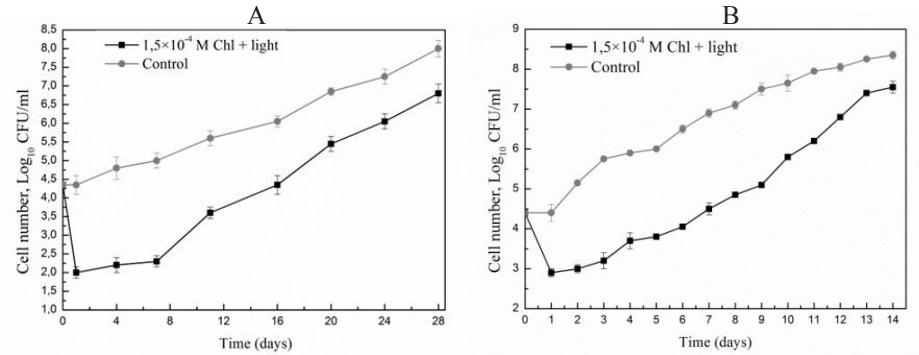
During treatment temperature on the surface of tomatoes changed only from 23 °C to 28.5 °C what means that treatment is not dangerous to food matrix.
Nutritional quality of treated tomatoes was tested evaluating total antioxidant activity. No statistically significant changes of the antioxidant activity of treated tomatoes have been found.
Comparing the decontamination efficiency of Chl-based photosensitization with conventional preservation treatments showed that that Chl-based photosensitization was most effective (Fig. 2).
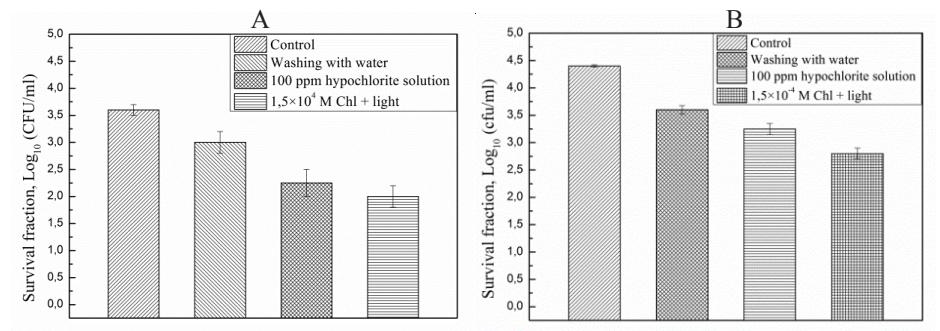
Chl-based photosensitization drastically reduced the population of naturally distributed surface attached mesophilic bacteria and inoculated termoresistant strains of B. cereus and L. monocytogenes. Moreover, it did not induce harmful effects on nutritional quality of tomatoes, acted nonthermally and prolonged the shelf-life of tomatoes by 4 days. In our opinion, chlorophyllin-based photosensitization has a huge potential as alternative not-chemical, light-based fruit and vegetable preservation technology.