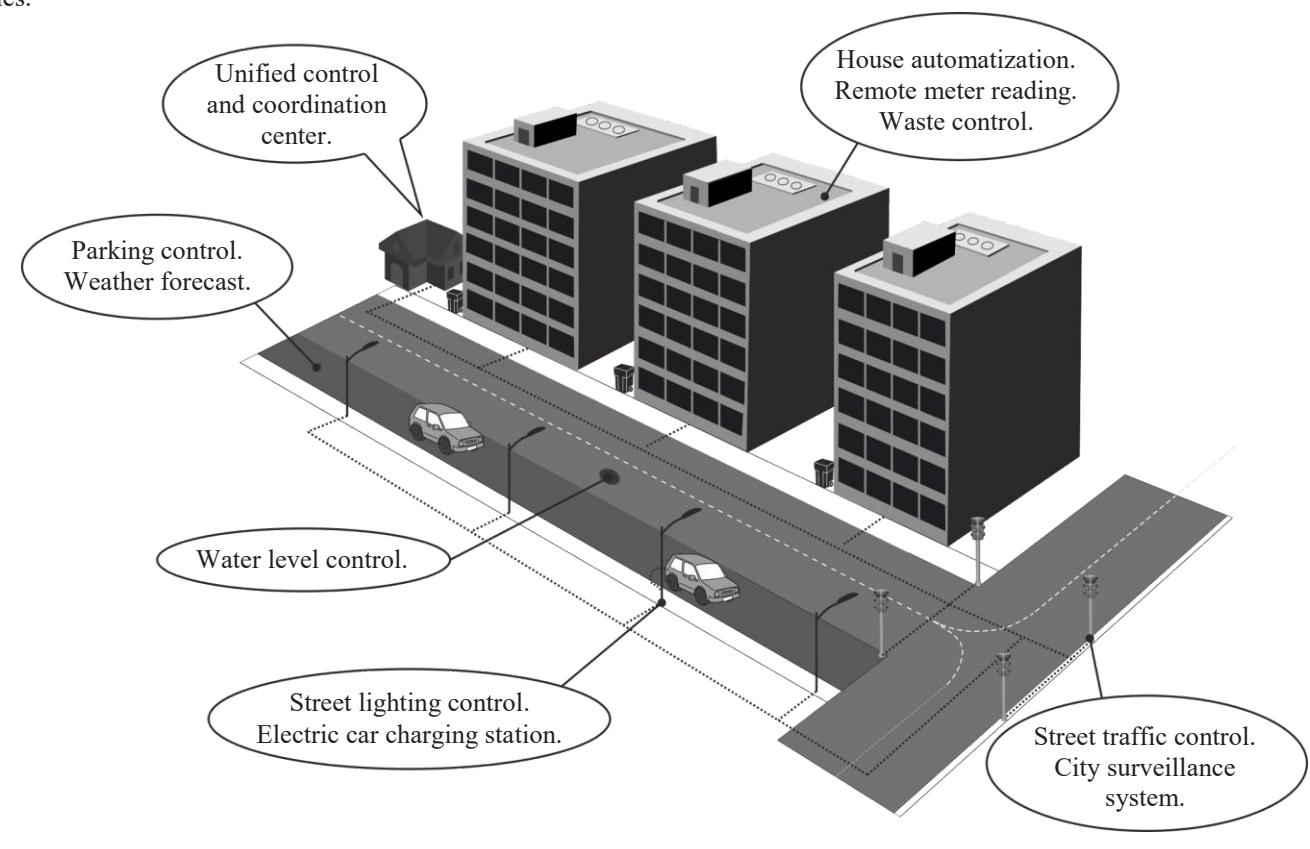
In today's world we can observe an incredible boom of electronic technology. A great amount of new devices are being integrated into more and more different fields of human activity. Concerning this, it is no wonder that there is a huge demand for high-quality data transfer channel between different devices and control center.
During last decade PLC (power-line communication) technology is becoming more and more popular as cheap and low noise-dependent technology. In PLC, the communication is implemented by transferring data using AC power cables by modulating signal with much higher frequencies than AC mains. One of the greatest advantages of such a communication is the fact that it can be easily implemented in already existing electrical infrastructure, because it doesn't require any additional wiring. Furthermore, improved modulation and data coding techniques allowed to create long-distance (>100km) PLC communication devices. These aspects make PLC especially popular for different Smart City features. Unfortunately invented in 90-ies, PLC wasn' popular for a long time due to high noise level in power grids. This made PLC to develop in different directions and nowadays we have a huge amount of different incompatible and competing PLC modules with different communication approaches.
During this study we were analysing different PLC parameters (different modulations, transfer protocols, regulations) trying to find the optimal combination, suitable for small package transfer by low-voltage power lines. Moreover, several already existing PLC chips were compared. Furthermore, we were trying to lay a foundation for combining different technology PLC chips to expand already existing Smart City possibilities in Vilnius and other cities.