
Breast cancer is the most common oncological disease among women in Lithuania and many western countries. It is also responsible for the main part of deaths from malignant diseases [1]. Since early diagnosis increases the chance of survival, it is of high importance to search for biomarkers, which would enable clinicians to detect breast cancer at its early stages. Initiation and progression of cancer depends not only on genetic alterations but also on epigenetic changes such as DNA methylation. DNA methylation biomarker is defined as a molecular target that undergoes DNA methylation changes in carcinogenesis. Aberrant DNA methylation in the promoter regions of genes is well-defined in tumors and is commonly associated with silencing of tumor suppressor genes. Such epigenetic biomarkers might be utilized for early diagnosis of cancer, predicting and/or monitoring the therapeutic response [2].
The aim of this study was to analyze the promoter methylation of APC gene, which is a tumor suppressor gene and plays a critical role in several cellular processes, and therefore has a potential to be a biomarker for breast cancer diagnosis.
In the present study, 74 breast carcinomas and 29 control samples (breast tissue samples from women with benign breast diseases) were analyzed for APC promoter methylation. First, bisulfite conversion was used to convert unmethylated cytosine to uracil. Methylation specific PCR (MSP), which uses different primers for methylated and unmethylated DNA, was used in order to qualitatively determine the methylation status. MSP products were visualized by agarose gel electrophoresis.
Methylation frequency of APC was 54.6% and 0% in breast tumors and control samples, respectively ($p < 0.0001$), showing its potential diagnostic value for breast cancer diagnostics (fig. 1). APC methylation was also analyzed according to clinical-pathological patients' parameters. Statistically significant methylation frequency difference was found between luminal A (61%) and triple negative (18%) breast cancer molecular subtypes, which are the two most distinct subtypes of breast cancer. No associations were found between APC methylation status and patient's age, tumor stage, tumor size, or disease recurrence/progression.
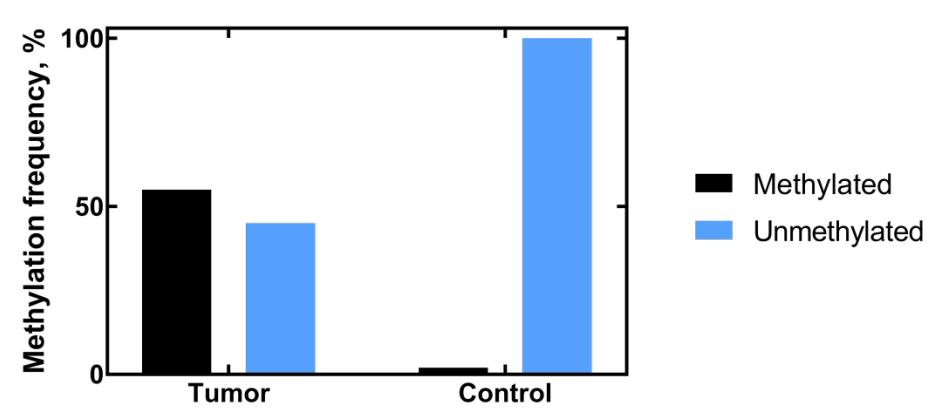
In conclusion, our study revealed that APC gene promoter methylation could be utilized for diagnostics of breast cancer. However, further validation in independent cohort is needed.