
Human carbonic anhydrase XII (CA XII) is a single-pass transmembrane protein with an extracellular catalytic domain [1]. This enzyme is being recognized as a potential biomarker for different tumors [2]. Monoclonal antibodies (MAbs) are widely used as diagnostic, research and therapeutic reagents in oncology [3]. An important step in the characterization of MAbs, especially those used in therapeutic strategies, is the identification of the binding sites (epitopes) of these antibodies on their target antigens [4].
The aim of our study was to construct overlapping CA XII protein fragments to identify the epitopes of MAbs raised against recombinant CA XII.
Eight hexahistidine-fused overlapping fragments (fragment # 1 (aa 1–94), fragment # 2 (aa 41–175), fragment # 3 (aa 166–264), fragment # 4 (aa 75–264), fragment # 5 (aa 9–195), fragment # 6 (aa 17–184), fragment # 7 (aa 24–207) and fragment # 8 (aa 33–196)) of CA XII protein (Fig. 1) were constructed to identify the epitopes of MAbs raised against recombinant CA XII. All CA XII fragments were efficiently expressed in transformed E. coli cells. MAbs against CA XII were generated by hybridoma technology and characterized previously [2]. In total, 10 MAbs (1D5, 4A6, 5D2, 8C9, 9A8, 13F5, 15A4, 6G5, 14D6, 20G7) recognized the extracellular domain of CA XII protein by Western blot. Specific binding of the MAbs with the constructed CA XII fragments was observed. The accurate aa sequence of the epitope recognized by the MAb 14D6 was determined (Fig. 1). It was shown, that the MAb 14D6 binds near the active center of CA XII, which explains the inhibitory properties of this antibody.
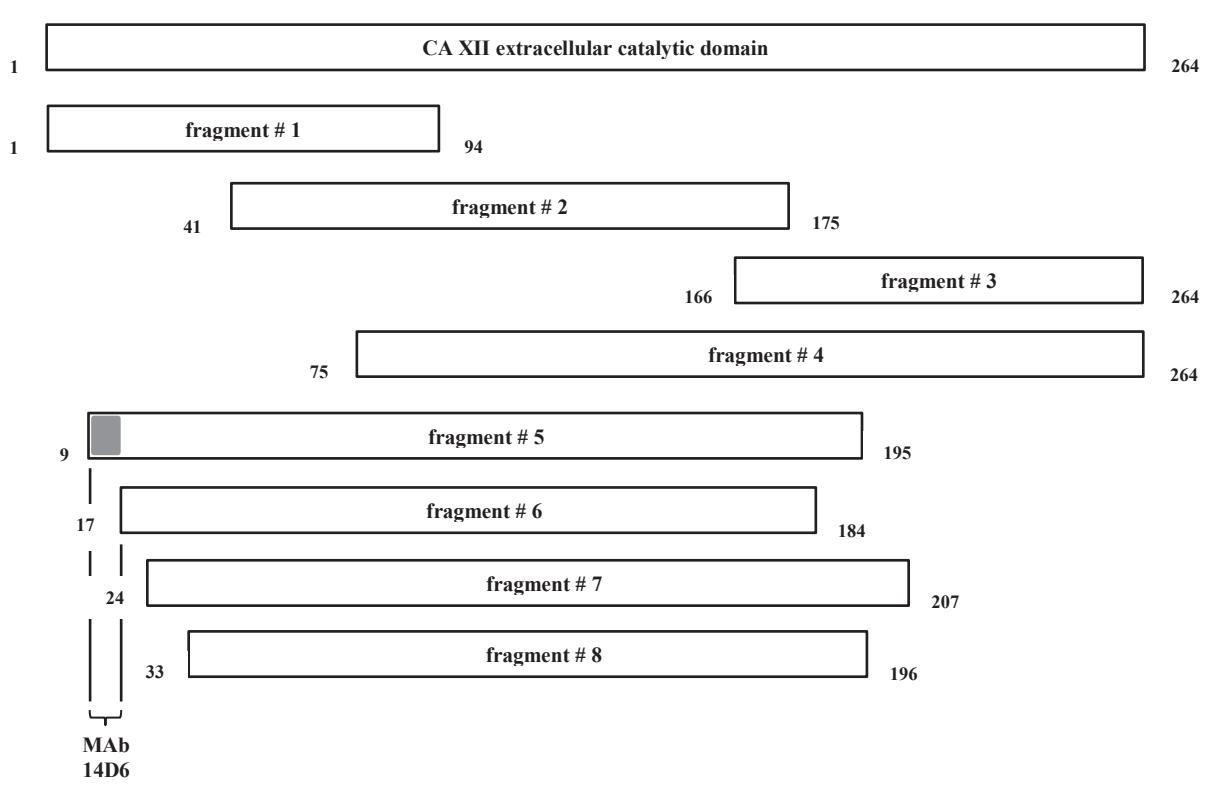
This study provides new data on the CA XII-specific MAbs, that are promising diagnostic and therapeutic tools which can be applied for the diagnostics and therapy of various types of cancers.