
Pulmonary embolism is a sudden blockage in a lung artery [1]. The blockage usually is caused by a blood clot that travels to the lung from a vein in the leg [1]. Pulmonary embolism is a relatively common acute cardiovascular disorder with high early mortality rates that, despite advances in diagnosis and treatment over the past 30 years, have not changed significantly [2]. Pulmonary embolism is responsible for approximately 100,000 to 200,000 deaths in the United States each year. [3]
This study was collected in Vilnius university hospital Santaros clinic's retrospectively, from case reports of pacients, treated from 2015 to 2016. All data of patients with pulmonary thromboembolism treated in VUH SC from 2015 to 2016 was collected and analyzed.
In the period from 2015 to 2016, 570 patients with pulmonary thromboembolism were treated in VUL SK. 21-98 years of age (M=71.19, SD=14.23). 309 women (54.2%, N=570) and 261 men (45.8%, N=570). 52 patients died during treatment (9.1%, N=570). 109 patients had/have an oncologic disease (19.1%, N=570). 214 patients were treated in an intensive care department (37.5%, N=570). 89 patients had a sudden drop in blood pressure (15.6%, N=570). Right ventricular dysfunction (57.7%, N=570) was observed in 329 patients.
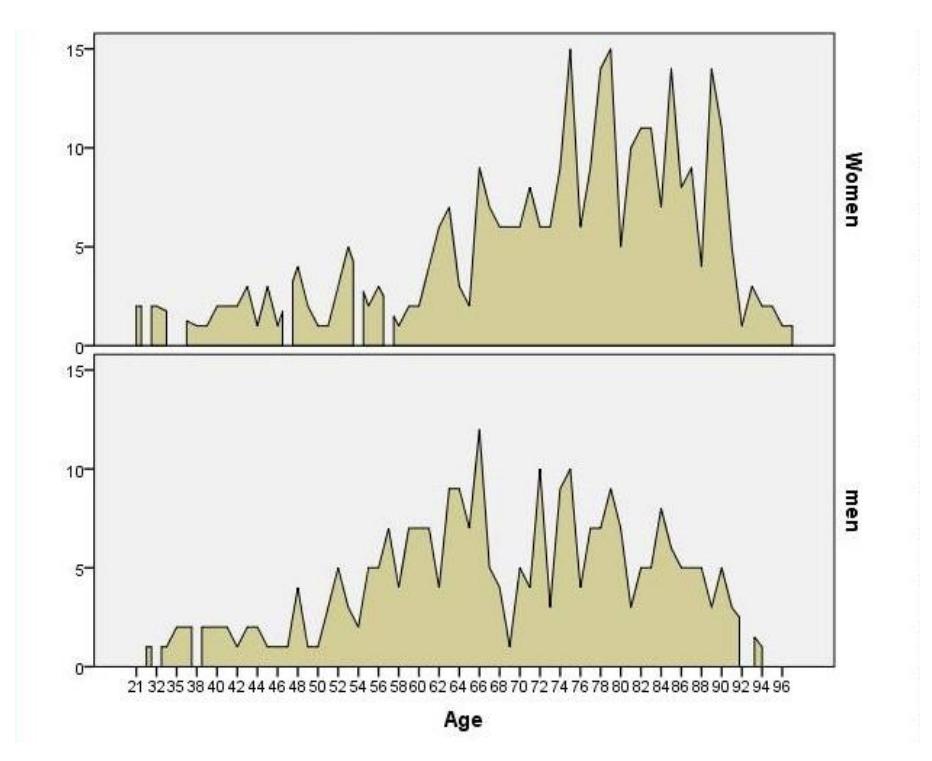
Pulmonary embolism is increasingly prevalent among elderly patients, yet the diagnosis is missed more often in these patients than in younger ones because respiratory symptoms often are dismissed as being chronic. [4] In one retrospective study of 1023 patients with PE, the five-year cumulative mortality rate was 32 percent [5]. Mortality was only 9.1% in Lithuania.