
Nowadays various titanium oxide layers are widely used for different applications. Solar cells are one of such areas where titanium oxide is especially applicable. Despite this fact there is still a high interest in synthesis of new titanium oxide layers using different methods for new applications in practice. Properties of titanium oxide and its application areas depends on synthesized layer thickness, composition and surface morphology [1,2].
This study is focused on the synthesis and characterization of titanium monoxide layers on a pure titanium foil or titanium layer sputtered on the microscopic glass. Hydrothermal synthesis was selected herein due to simple control of the process. It was observed that physical properties of synthesized titanium oxide layers as well as band gap values depend on the synthesis conditions. Scanning electron microscopy (SEM), X-ray diffraction (XRD), and band gap investigations were employed in this study for the characterization of formed and calcined layers.
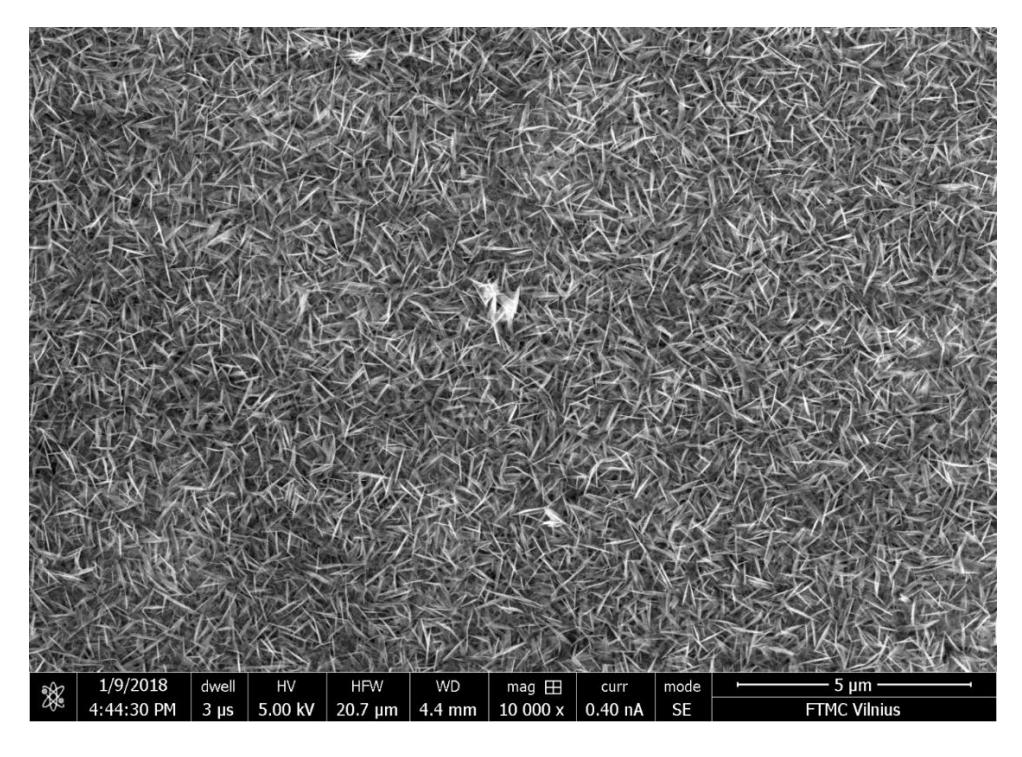
It was determined that hydrothermal oxidation is good technique to form high surface area titanium monoxide, TiO0.84, thin films (Fig. 1). The main factors determining composition of titanium monoxide thin films are hydrothermal oxidation temperature and pH.