
This study describes an approach for solving market segmentation problem using Kohonen's self-organizing maps [1] and hierarchical cluster analysis. Z-score and principal component analysis were used for data pre-processing [2]. This approach eliminates the need for redesigning the neural network architecture in exploratory data analysis when the number of expected clusters changes [3]. We have developed a toolkit (in R programming language) that allows non-technical specialists, such as marketers, to analyze customers and find patterns in the data of their companies. The toolkit can be integrated with various CRM systems, such as Salesforce.
The method was tested on the Ta-Feng dataset, which was laid out in free access by ACM RecSys. It contains information about purchases of various goods made by more than 32 thousand unique customers. Each of the 817741 records describes one transaction made by the buyer with the help of nine characteristics (transaction date, transaction amount, etc.). The sample result of applying our approach to this dataset is given below (Fig. 1).
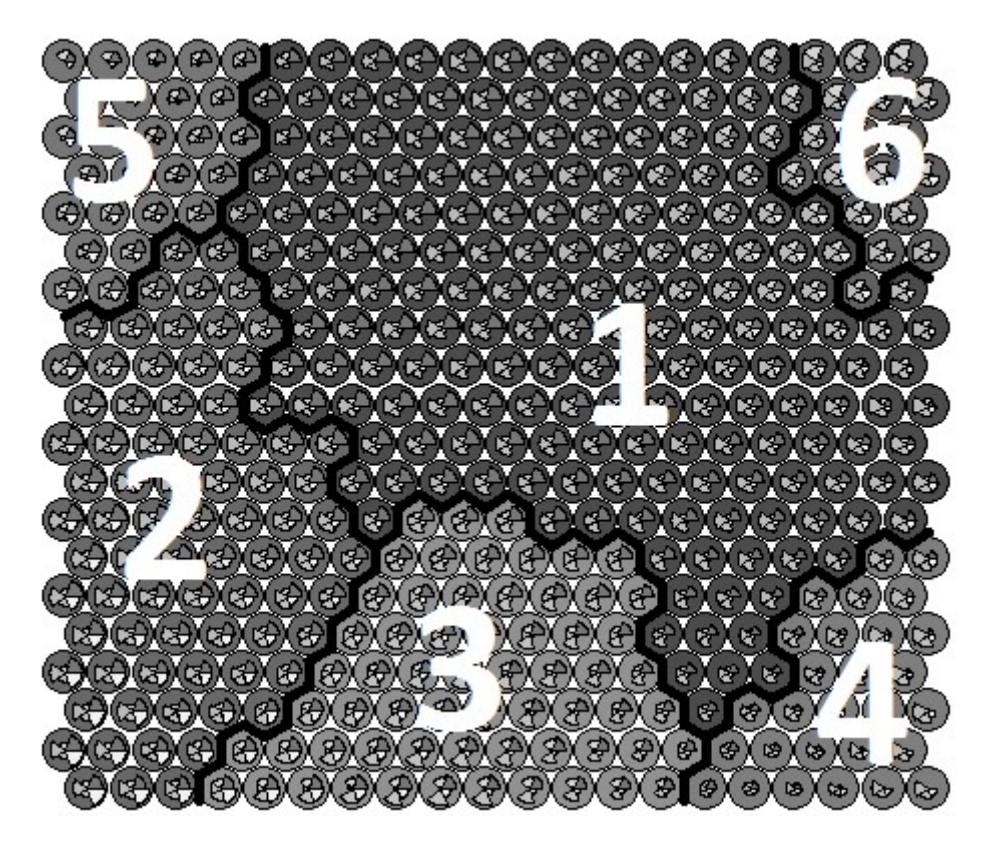
For example, there are mostly VIP-customers in cluster 6. They make very expensive purchases, but the company doesn't have significant profit from them. On the other hand, the company can focus its marketing policy on cluster 5, which contains aged people - they bring a lot of income on the weekends. Thus, the company can optimize its business processes.