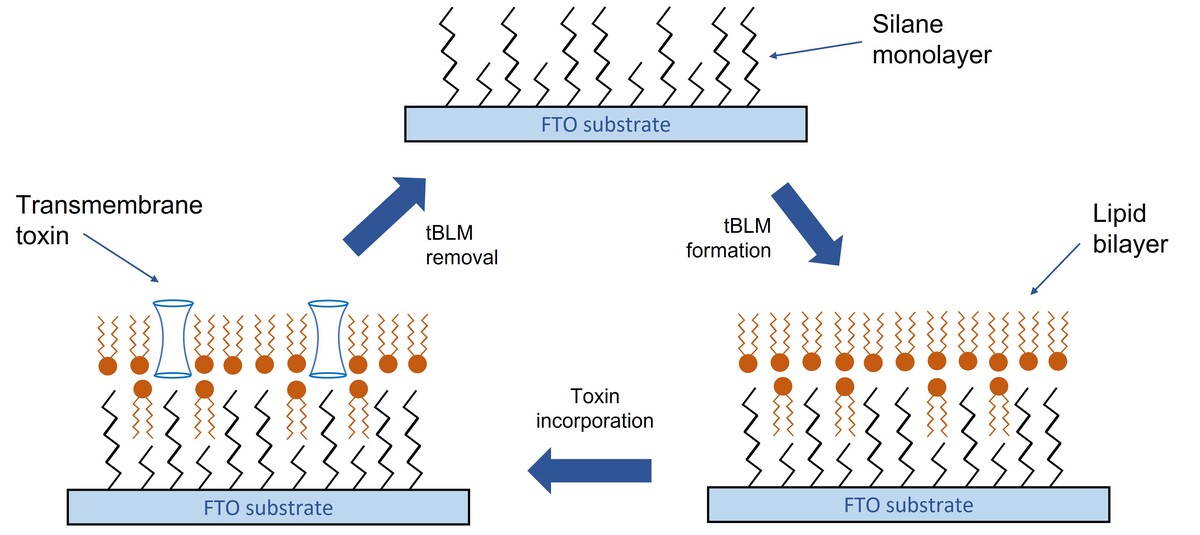
Tethered phospholipid membranes (tBLMs) on conductive surfaces modified with self-assembled monolayers (SAMs) are increasingly studied for biosensor development. While gold is commonly used for these biosensors, its poor membrane regeneration and high cost make it less desirable. Metal oxides as substrates for tBLM formation offer a potential alternative due to their lower cost and the possibility of membrane regeneration.
This study investigates tBLMs of varying compositions formed on fluorine-doped tin oxide (FTO) surfaces modified with different silane compounds. The focus is on the interaction between the membranes and proteins, and the conditions necessary for membrane regeneration after protein incorporation. Since phospholipids are soluble in many alcohols while proteins are not, the primary objective was to determine the optimal conditions for removing both the phospholipid membrane and the protein from the surface. Ideally, after removing the protein-affected bilayer, the SAM-modified FTO surface would remain intact, allowing for repeated membrane formation. This work explores how regeneration efficiency is affected by the conditions used for the removal of tBLM with incorporated proteins.