
Sodium alginate is widely used in the polymer research field due to its properties in forming three-dimensional hydrogel structures. This type of hydrogel is likewise actively used in the cosmetic, food, and biomedical fields [1]. Sodium alginate, which is a polymer of natural origin, can be structured with polyvalent metal ions, resulting in the creation of a crosslinked polymer network. Such crosslinkers are often inorganic salts of aluminum, calcium, strontium, barium, copper, and others [2]. In this case, the composition of the hydrogel will contain impurities of low-molecular acid residues, such as hydrochloric, acetic, nitric, or other acids.
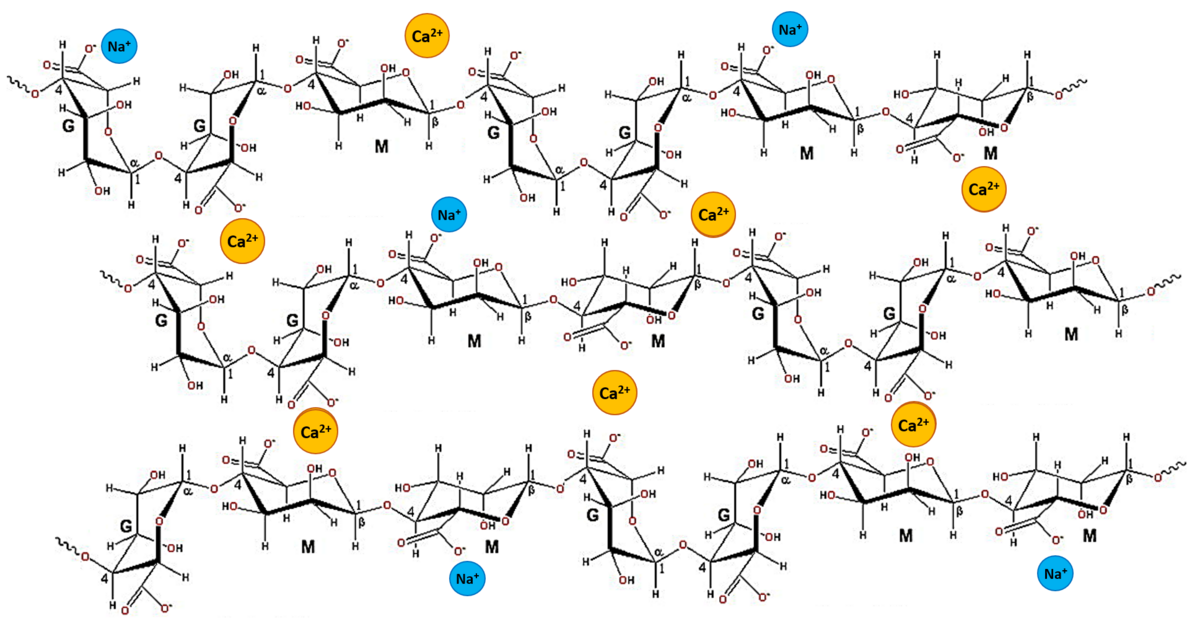
The work carried out a full-factorial analysis of the dependence of physicomechanical properties on the ratio between the reagents, their concentrations in the initial solutions, and the method of obtaining such compositions. The dependence of the sol-gel fraction, the degree of swelling in distilled water and a model body fluid, the physicomechanical properties of these hydrogels on the method, and the degree of structuring were analyzed. During the study, a rotational rheometer was used for oscillatory, axial, and other loads on the samples.
The introduction of a crosslinker for alginate hydrogel in the form of polyelectrolyte salts has a number of advantages in assessing such indicators as physicomechanical properties and swelling in model fluids at different temperatures.