Hydrogen can be regarded as a viable alternative to conventional fossil fuels, such as coal, oil and natural gas [1]. The necessity for the replacement of these fuels arises from their perpetual depletion, the concomitant pollution of the environment and the promotion of the greenhouse effect, thus contributing to climate change when burned. Although the majority of hydrogen is currently produced from natural gas (62%), coal (19%) or naphtha reforming (18%), there is potential for change. The borohydride hydrolysis reaction is a process that yields hydrogen in an extremely pure form, which can be utilised directly as a hydrogen fuel cell. Moreover, fuel cells that employ pure hydrogen emit minimal pollutants other than water [2].
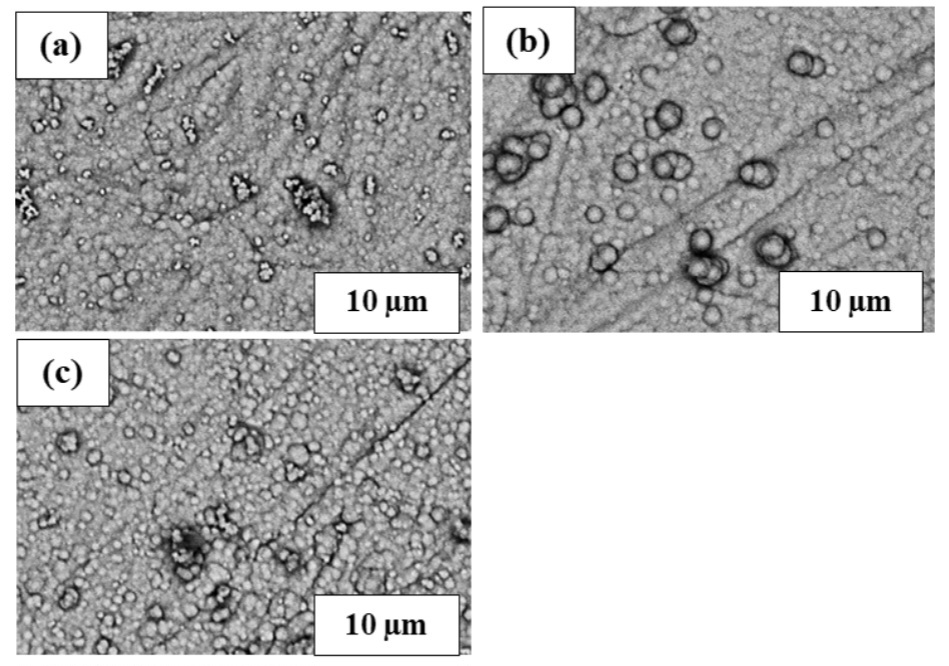
In the present study, the synthesis of NiCo(10)/Cu, NiCo(20)/Cu, and NiCo(80)/Cu catalysts was accomplished through the chemical method of metal deposition. The surface morphology, internal structure and chemical composition of the obtained catalysts were analysed using scanning electron microscopy (SEM) and induced plasma optical emission spectroscopy (ICP-OES). It was determined that the prepared coating particles consist of oval-shaped agglomerates. The composition of the catalysts was analysed, showing Ni loading ranging from 179.4 to 789 µg/cm³ and Co ranging from 88.2 to 614 µg/cm³. The catalytic properties of the formed catalysts for sodium borohydride hydrolysis reaction were investigated, revealing the two-component NiCo(80) coating as the most active. The activation energy of this catalyst was determined to be 56.4 kJ/mol and its hydrogen evolution rate was found to be 1.24 ml/min at 30 °C and 14.59 ml/min at 70 °C.