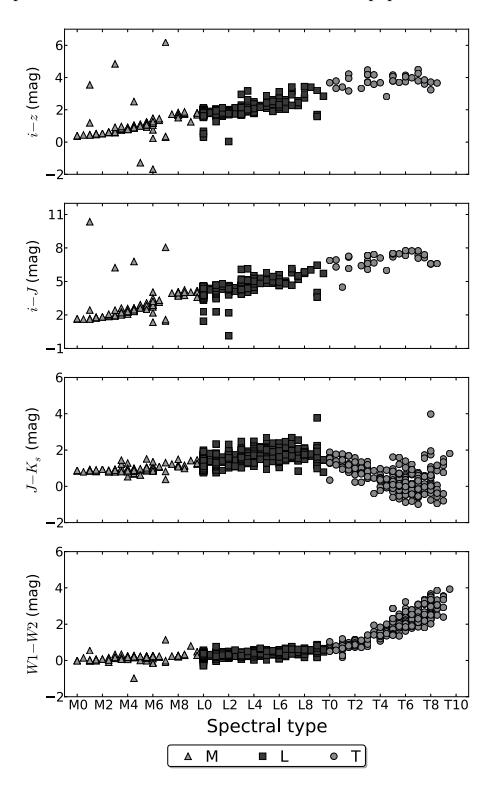
Brown dwarfs are substellar objects which, due to their low mass, fail to initial and maintain hydrogen fusion during the initial collapse. Although it was predicted of their existing in 1960s, [1] they were discovered in the mid 1990s for the first time. The discovery of brown dwarfs brought about the increase spectral classes by three new spectral types: L, T [2] and Y [4]. In spite of intensive researching, many questions have still left without answer. Formation process and rare occurrence as as companion to star have not been solved yet. Their number and distribution in the universe are also open to question. The only way to find answer to this and other questions is a constant search for new brown dwarfs. We present the method and results of the search for brown dwarfs conducted in July 2014. Our method is based on wide-field searches and photometric properties of brown dwarfs which is now the most pupular and efficient approach.