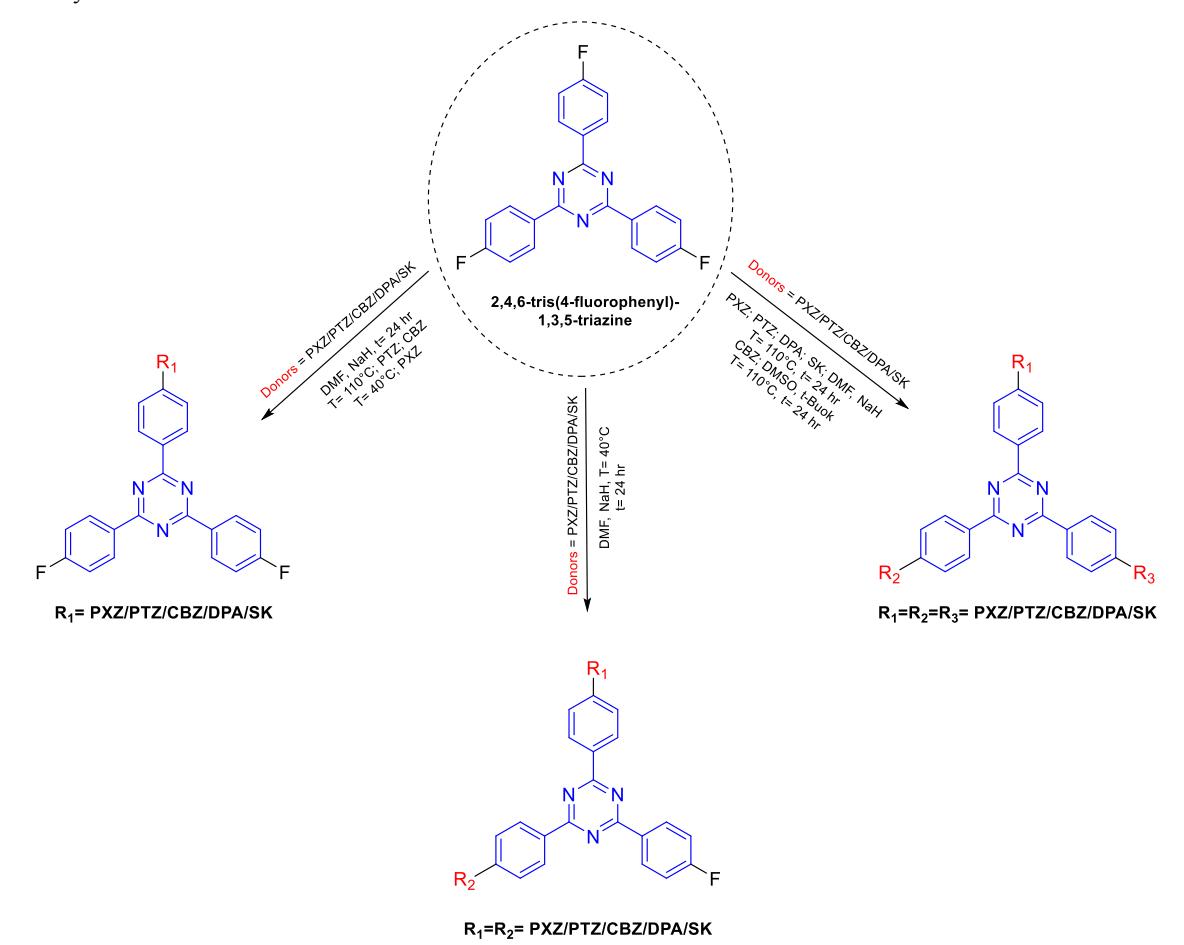
Thermally activated delayed fluorescence (TADF) properties, which enable the harvesting of light from both singlet and triplet excitons without the use of any noble heavy metals, are of interest for a wide range of applications. These materials are now considered the third generation of OLED materials [1]. Among such emitters, the 1,3,5-triazine TADF derivatives can be synthesized using the 2,4,6-tris (4-fluorophenyl)-1,3,5-triazine a cost-effective intermediate developed by the company «LABKICOSMOS». Through tri-substitution of the fluoride, the 1,3,5-triazine moiety is decorated with carbazole, phenothiazine, phenoxazine, diphenylamine, and 3-methyl indole donors, yielding donor-acceptor type compounds with the TADF effect [2, 3]. Our second goal was to create a new series of molecules derived from 1,3,5-triazine. To the best of our knowledge, the mono- and di-substitution of the 2,4,6-tris (4-fluorophenyl)-1,3,5-triazine intermediate has never been investigated. This work is focused on a new series of 1,3,5-triazine TADF derivatives through the mono- and di-substitution of our intermediate. The study of the TADF effect and the efficiency of this new series is still in progress.
The presentation describes the synthesis of the tri-substituted derivatives as well as the first results concerning the selective synthesis of mono- and di-substituted derivatives.