During past years rare sugars, such as D-tagatose have drawn attention due to their ability to replace naturally occurring sugars that lead to obesity, hypertension, diabetes, etc. Nontheless, heavy consumption of D-tagatose is shown to have negative effects, therefore quantitative and qualitive determination in various media is an important challenge [1]. Currently, only a few methods are used to detect D-tagatose: colorimetric, mass spectrometric and chromatographic. Unfortunately, these methods are complicated and do not allow for easy and fast analysis, so the aim of this work is to develop a sensor that can perform real-time analysis of D-tagatose synthesis in a bioreactor. Efficient direct electron transfer (DET) from an enzyme layer to the electrode is a highly desirable feature in biosensors, as it allows for a mediator-free system, which increases the sensitivity and selectivity of such a system and reduces its cost [2]. In our study we used D-fructose dehydrogenase (EC 1.1.99.11) from Gluconobacter industrius – an enzyme that catalyzes D-fructose oxidation to 5-keto-D-fructose. Despite the fact that this enzyme is very selective, after immobilization, its selectivity decreases and a new property of oxidizing D-tagatose appears. This feature allows to construct a D-tagatose bioelectrochemical sensor.
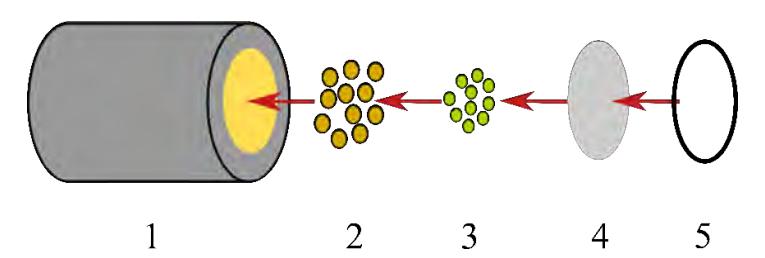
In this study we have constructed a stable biosensor and have shown its viability in a simulated bioreactor. Several different systems were tested: the surface of the working electrode with added gold nanoparticles (AuNP) was modified with thiol compounds with different functional groups – 4-mercapto phenol, 4-mercaptobenzoic acid, 4-methyl benzenethiol and 4-amino thiophenol. It was demonstrated that different thiols not only affect enzyme adsorption but also determine other properties of the biosensor, for example, detection linear range, sensitivity. Also, the long-term stability was investigated.