Bacteriophages are the most abundant biological entity in the biosphere, and they are responsible for the destruction of 20-40% of bacterial cells each day [1]. This evolutionary pressure drives the emergence of diverse bacterial defence systems, one of which is the BREX (Bacteriophage Exclusion). This system is spread in about 10% of prokaryotic genomes, yet its detailed defence mechanism remains to be elucidated [2].
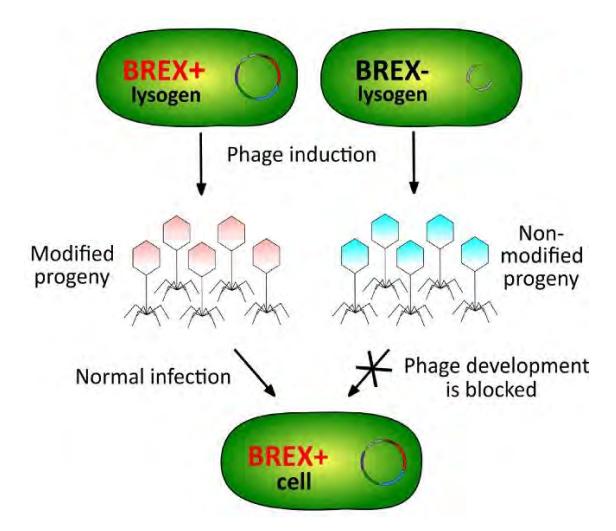
Our research object is the type I BREX (BREX1) system, which is encoded in the six gene cluster: brxA-brxB-brxC-pglZ-brxL-pglX. This system methylates host DNA at certain sequences, protecting it from autoimmunity. The non-methylated DNA of bacteriophages triggers BREX1, which blocks the phage's proliferation (Fig. 1). We have previously showed that deletion of certain BREX1 genes resulted in cytotoxicity [3]. This suggests that some BREX1 proteins participate in autoregulation of the immune response, while other might act as effectors interfering with the vital process of the cell. Here, we assess cell viability by expressing various combinations of BREX1 genes thus seeking to identify the effector and regulator proteins of the BREX1 immunity.