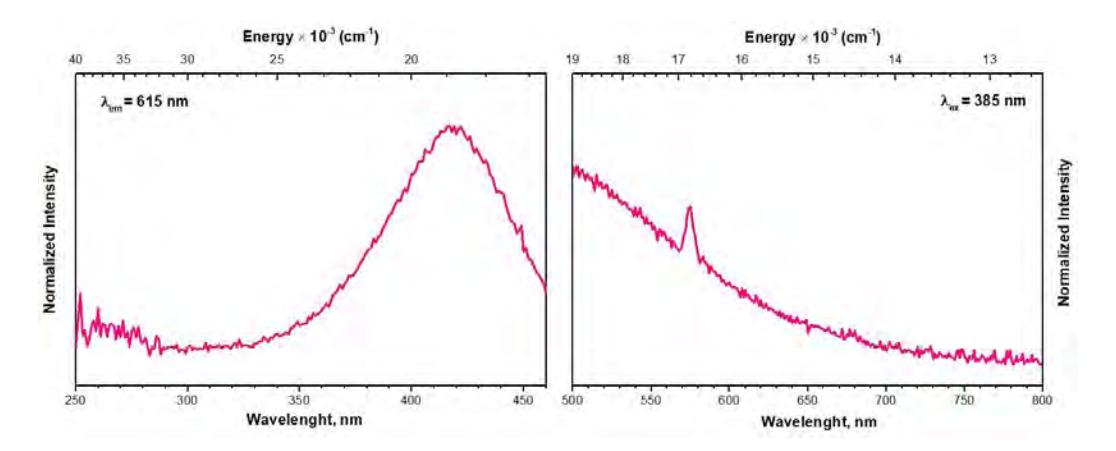
The growing demand for multifunctional materials with novel properties has interested studying wood structures doped with gadolinium phosphate (WCC). One of the main characteristics limiting wood's potential is its flammability whereas rapid destruction and collapse of wood structures occur. High weathering and biological resistance of wood is also desirable as wood is the most abundant building material used in residential and non-residential buildings, furniture constructions, and decoration. Therefore, inorganic compounds within the wood matrix impact wood's mechanical properties such as compressive, tensile, bending strengths, and award additional luminescent/magnetic properties [1-4].
This work proposes inorganic GdPO4 H2O:Eu compound produced by in situ hydrothermal synthesis as a new alternative method to increase wood chemical resistance and confer new optical properties.
After in situ synthesis, the characteristics of the samples were observed by scanning electron microscopy (SEM) and computed tomography (CT); optical properties were determined by luminescence analysis (Fig.1). Thermogravimetric (TG) analysis was performed to attest the effects of GdPO4 on the thermal degradation of wood.