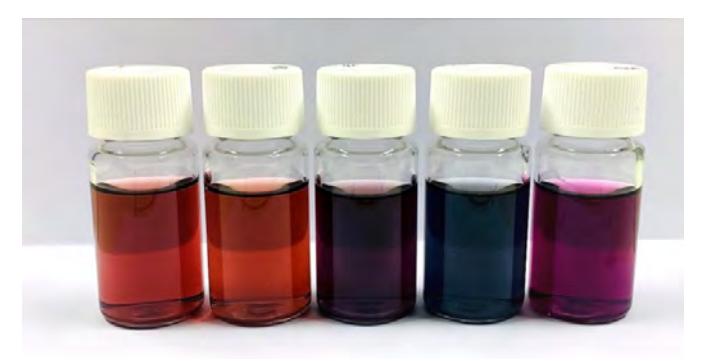
Nanomaterials have become increasingly popular and crucial in various industries today, growing in importance every year [1]. Gold nanoparticles (AuNPs) have a rich history in the field of chemistry, dating back to ancient Rome where they were used to enhance the appearance of glasses through staining. The unique physical and chemical properties of AuNPs can be altered by adjusting their structural size through various fabrication techniques. Due to this versatility, AuNPs are a promising option for applications such as colorimetric analysis, biosensors, photothermal transducers, and imaging [2]. Various sized and shaped AuNPs can be synthesized, such as Au nanospheres, nanocages, nanoshells, and nanorods, all of which exhibit surface plasmon resonance [3].
In recent years, gold nanorods (AuNRs), which are rod-shaped AuNPs, have been found to possess distinct physical, optical, and chemical properties that make them suitable for various biomedical uses, such as drug/gene delivery, photothermal/photodynamic therapy, and theranostics [4]. The optical properties of these small nanostructures are related to longitudinal surface plasmon resonance (LSPR), which is a remarkable optical characteristic of metal nanoparticles that arises from the interaction of an incoming electromagnetic wave at a specific wavelength with the electrons, leading to their collective oscillation [5]. The anisotropic structure of GNRs displays two surface plasmon bands in the UV-Vis spectrum, corresponding to surface electron oscillation on the transverse and longitudinal sides of the particle [6]. There are various methods for synthesizing AuNRs, but the seed-mediated growth approach has garnered the most attention due to its simplicity, high production of nanorods, and ability to easily regulate the aspect ratio [7].
The primary objective of the study was to fabricate AuNRs of varying lengths using the seed-mediated method. The characterization of the AuNRs was carried out through the use of SEM, DLS and UV-VIS techniques. These techniques allowed for the detailed examination of the structural and optical properties of the AuNRs and provided valuable insight into the effectiveness of the synthesis method. The results of the characterization were crucial in determining the success of the synthesis process and in further understanding the potential applications of AuNRs in various fields.