Polyethylene terephtalate (PET) is one of the most utilized plastics for food and beverages packaging. PET does not have side effects in nature. However, there is a huge problem of increasing amount of plastic wastes in the world. Chemical recycling is one of the options to reduce PET wastes.
PET glycolysis, chemical recycling method, is a transesterification reaction. There are four main techniques of glycolysis: (i) catalyzed glycolysis; (ii) solvent-assisted glycolysis; (iii) supercritical glycolysis; (iv) microwave-assisted glycolysis. PET flakes dissolve in ethylene glycol (EG) in the presence of catalyst and causes formation of bis-2-hydroxyethyl terephthalate (BHET) monomer (Scheme 1) [1].
In our research, mayenite (Ca12Al14O33) was used as a catalyst for glycolysis reaction. Synthesis and preparation of mayenite have influence for its catalytic activity. The highest surface area (m2/g) and reducibility (mmol H2/g) of mayenite particles, the more active catalysis [2].
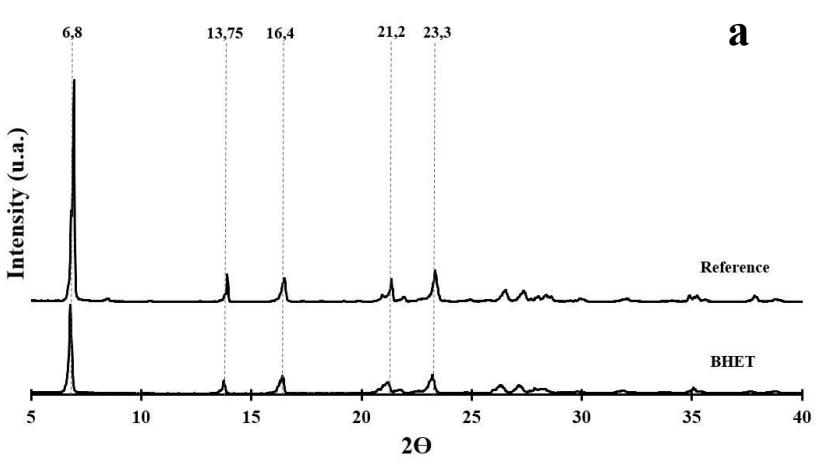
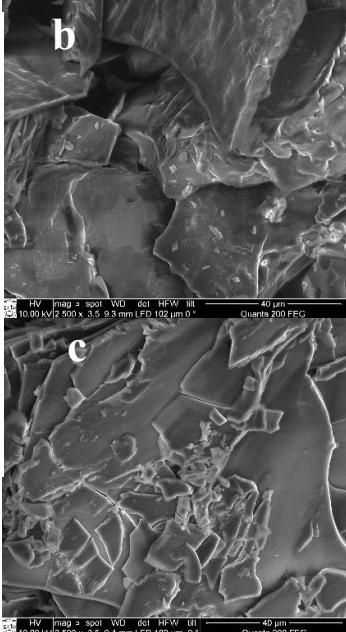
BHET synthesis was carried out in three-neck round bottom flask. Mayenite, which calcination temperature was 900 °C, was added to EG solvent, heated until 196 °C, then PET flakes were added and mixture was heated for 2.5 hours. After 2.5 hours, the mixture was cooled in ice-bath; boiling water was poured and heated until 100 °C. Mixture was filtered still hot. The filtrate was reheated until its clear, cooled to 5 °C and left for 16 h. The obtained crystals were dried at 60 °C. The BHET structure was proved by NMR, FTIR, XRD, TA analysis and compared to reference BHET, which was received from Sigma-Aldrich and recrystallized (Fig. 1).