
Hot embossing molding technology is widely used in the plastic molding process. Thermoplastic polymers are heated to the glass transition temperature and the mold starts the embossing process, then the matrix is cooled, and the demolding procedure is performed [1]. By including dynamic (vibration-assisted) conditions in the forming process, a viscoelastic material with multiple relaxations can be obtained [2]. Vibrations could also improve the flow of plastic into the mold.
To form a dynamic hot embossing forming environment, it should have three main components: a heating element, a pressure element, and a vibration element [3]. In this experiment, heating and vibration were created by using a magnetostrictive device, the technological part is patented by the European patent K158-89 EP and the Lithuanian patent K158-89. The tensile "Tinius Olsen" test machine was used to create the pressure force. Polyvinyl chloride (PVC) plastic was chosen for molding process. Using vibration-assisted hot embossing molding technology, a microstructure was obtained on a 4 mm thick sheet. Various molding parameters that may affect the molding process were tested: temperature, load, vibration frequency and amplitude. The quality of the resulting structure was analyzed using the diffraction method. After being illuminated with green (525 nm) laser light, the light was split into diffraction maxima. The data are arranged in order and presented in Figure 1.
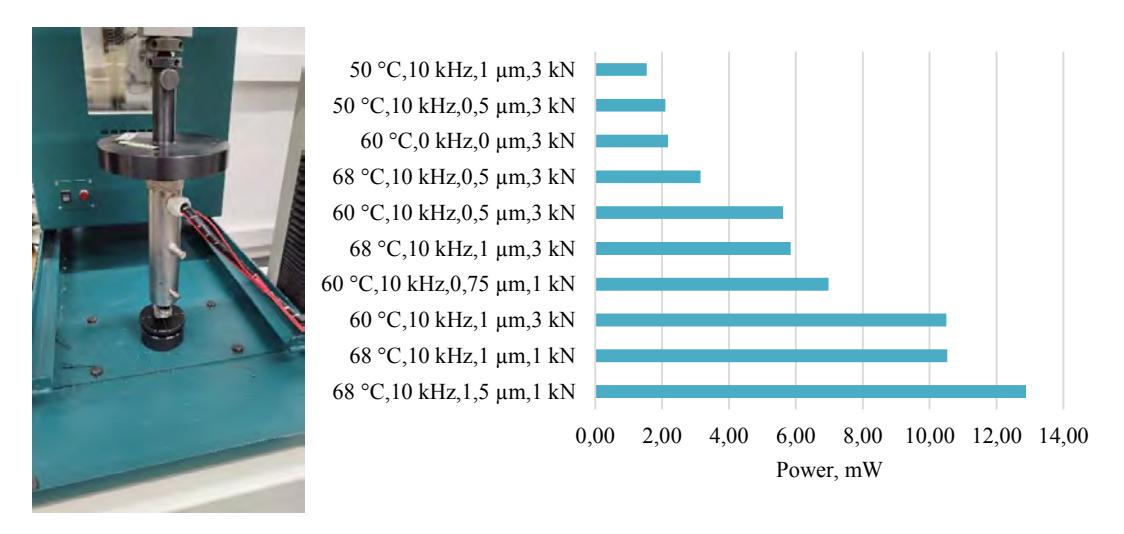
During the research, the most approximate conditions for the formation of microstructures were determined. Also, it was found that using hot embossing technology without vibrations, a lower quality microstructure was obtained, comparing vibration-assisted hot embossing molding technology.