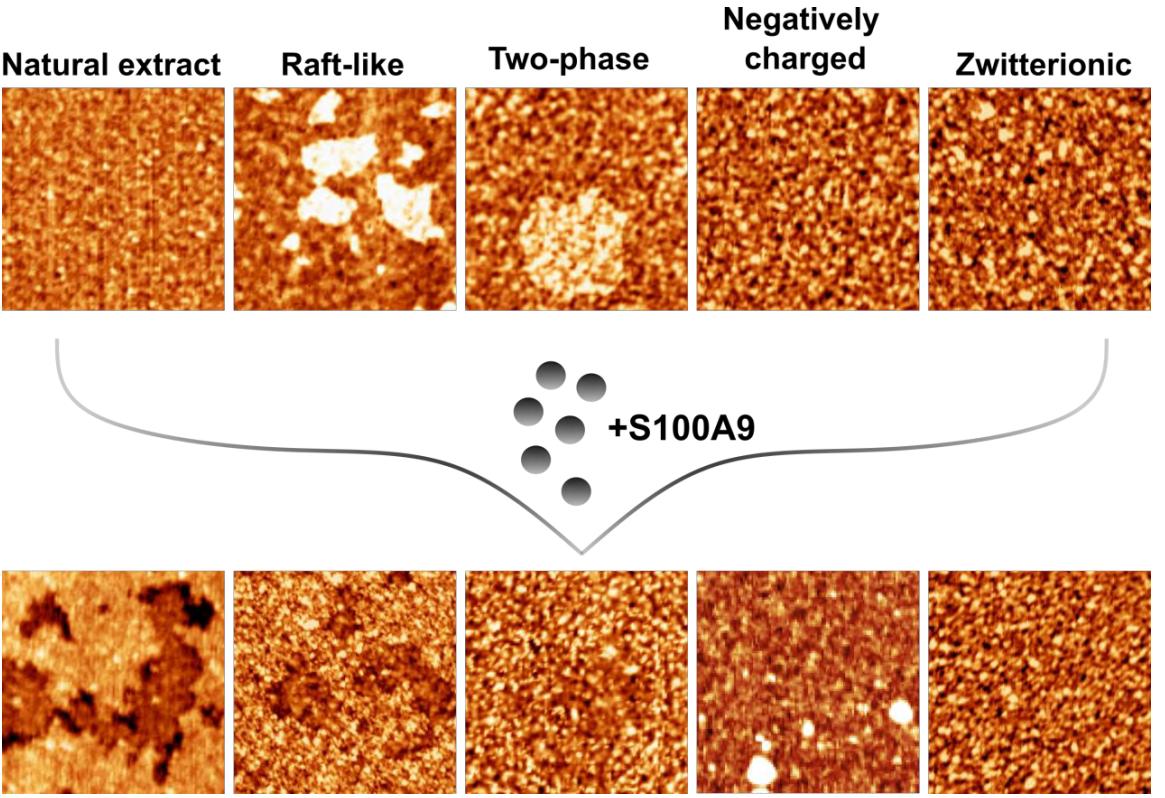
Pro-inflammatory, calcium-binding protein S100A9 is localized in the cytoplasm of a wide range of cells and regulates several intracellular and extracellular processes [1]. One of them is the participation in the inflammation associated with the pathogenesis of Alzheimer's disease (AD) [2]. The number of studies on the impact of S100A9 in co-aggregation processes with amyloid-like proteins is increasing. However, the interest in the interaction mechanism of protein S100A9 with biological membranes is still limited. In this work various biomimetic membrane models as lipid vesicles in solution and tethered lipid bilayers (tBLMs) were used to examine the interaction between the protein and the membrane surface. For this purpose we employed atomic force microscopy (AFM) and fluorescence spectroscopy techniques. Our results indicate that the damage induced by S100A9 in a calcium-free environment is mainly determined by membrane fluidity rather than by negatively charged lipids (Fig. 1). The most significant loss of integrity was observed in lipid bilayers composed of lipid mixture (brain total lipid extract). Furthermore, we demonstrate that the presence of Ca2+ ions promotes the membrane disruption induced by S100A9. These results might broader the understanding of S100A9 interactions with lipid membrane and potentially affect the development of new diagnostic and therapeutic approaches for AD or other related diseases.