Wood has been used in construction and other applications for centuries due to its unique properties. It is a natural composite material made up of various components, with the structural components of the wood cell wall mainly composed of cellulose, hemicelluloses, and lignin. These components contribute to the unique properties of wood, such as its strength, durability, and ability to absorb and release moisture. One of the most significant advantages of wood is the diverse possibilities for its modification due to its chemical composition and hierarchical porous structure. Despite all mentioned wood advantages enhancing the physicochemical properties of wood products and extending their useful life is crucial to sustainable production and consumption. Improvements are needed in properties such as photodegradation protection, thermal stability or fire retardancy, mechanical strength, resistance to biological degradation, and more [1-5].
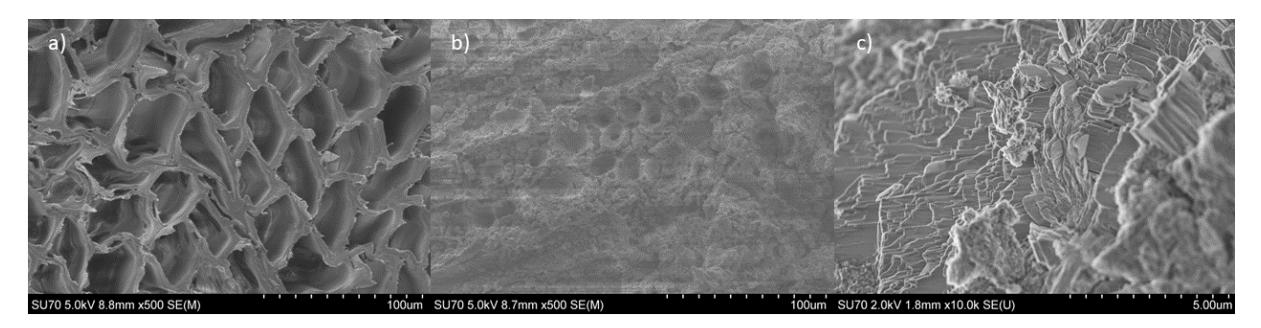
In this work, the goal is to improve the physical and chemical properties of wood by using eggshells as a source of calcium carbonate to create bioceramic-reinforced wood materials. Since eggshells are considered waste material and are rich in calcite, which is a source of calcium, they can be used to create a biocompatible ceramic material called carbonated hydroxyapatite. This process leads to the mineralization of wood, making it stronger and more fire-resistant. Additionally, incorporating calcite within the wood matrix can result in a CO2 storing hybrid wood material, which can help fight climate change by reducing emissions. The main focus of the work is to reinforce locally produced pine wood with biocompatible calcium phosphate-based ceramics to improve mechanical strength and fire-retardancy.