
Heteroaromatic components are widely encountered in small-molecule drugs [1]. Efficient functionalisation of these compounds is key for the discovery and testing of new therapeutics. Palladium catalysis is widely applied for this purpose, particularly in amination reactions. Despite extensive research, ligands currently used for amination of heteroaromatic compounds are prone to deactivation, necessitating high catalyst loadings and extended reaction times. In 2024 novel O-bound electron deficient phosphine ligand (Figure 1A) was shown to be resistant to the deactivation processes [2]. However, the reported system relied on an air- and temperature-sensitive palladium precatalyst, making the reactions difficult to reproduce. 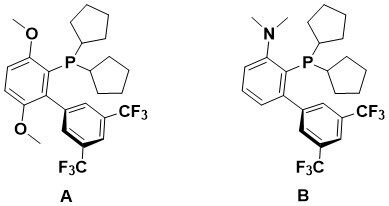
A NEW LIGAND FOR BUCHWALD-HARTWIG AMINATION
Jonas Paukstys1, 2, Tomas Paskevicius1, Linas Labanauskas1
1 Center for Physical Sciences and Technology (FTMC)
2 Vilnius University
[1] E. Vitaku, D. T. Smith, and J. T. Njardarson, “Analysis of the Structural Diversity, Substitution Patterns, and Frequency of Nitrogen Heterocycles among U.S. FDA Approved Pharmaceuticals,” Journal of Medicinal Chemistry, vol. 57, no. 24, pp. 10257–10274, Sep. 2014, doi: 10.1021/jm501100b.
[2] K. Feng et al., “Development of a Deactivation-Resistant dialkylbiarylphosphine ligand for PD-Catalyzed arylation of secondary amines,” Journal of the American Chemical Society, vol. 146, no. 39, pp. 26609–26615, Sep. 2024, doi: 10.1021/jacs.4c09667.