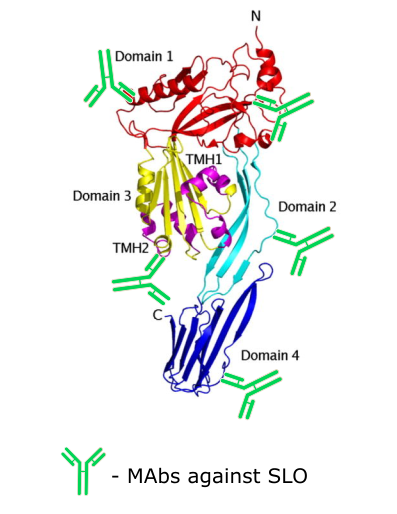
Streptolysin O (SLO) is a cholesterol-dependent cytolysin (CDC) produced by Streptococcus pyogenes. It is a main virulence factor of S. pyogenes that causes mild human infections such as pharyngitis, scarlet fever or severe infections such as necrotizing fasciitis and streptococcal toxic shock syndrome [1]. The pathogenic effect of SLO is based on its ability to form large pores approximately 30 nm in the cholesterol-containing cell membrane and induce host cell lysis [2]. Therefore, characterized SLO neutralising antibodies may provide valuable tools for reducing pathogenic effects.
In this study, a hybridoma collection (37 clones) producing monoclonal antibodies (MAbs) against SLO were characterized, evaluating their affinity, specifity, and potential applications in research. The MAbs were purified from a hybridoma growth medium using affinity chromatography. The purified MAbs were further characterized for specificity using enzyme-linked immunosorbent assay (ELISA), western blot (WB) and neutralizing activity determination methods. Among 37 MAbs, 16 were exclusively reactive with SLO, 21 MAbs were cross-reactive with perfringolysin O (PFO) and 22 MAbs were able to neutralize the cytolytic activity of SLO on a lung epithelial cell line. The overall results revealed four putative groups of the MAbs directed to different immunogenic regions of SLO. The selected MAbs from different groups will be further used for SLO epitope (recognizable sites) determination.
In conclusion, the characterized MAbs in this study may be useful for functional and structural studies of SLO and for the development of therapeutic or detection tools.