Bacteria are a dominant component of environmental microbial communities and play an essential role in ecosystem functioning [1]. Antimicrobial resistance (AMR) is disseminated among diverse bacterial species, leading to the emergence of potential pathogenic antibiotic-resistant bacteria (ARB) that threaten both animal and human health [2]. Agricultural fields act as the hotspots for AMR, where resistance genes transfer across ARB in the interconnected environmental compartments including soil, water, and animal feed [3]. Understanding how ARB are distributed within farmland ecosystems is necessary to establish baseline resistance levels and to assess potential risks to animal and public health. This study examined the diversity, distribution, and antibiotic resistance profiles of environmental bacteria from ecological dairy farms in Lithuanian.
Bacteria strains resistant to at least one of the tested antibiotics (ampicillin, streptomycin, tetracycline, chloramphenicol) were isolated from soil, feed, and freshwater samples of three pastoral dairy farmlands. Isolates were identified by 16S rRNA gene sequencing and antibiotic resistance profiles were determined by quantitative minimum inhibitory concentration (MIC) assay. Associations between resistance patterns, bacterial genera, and habitat were evaluated using statistical analyses.
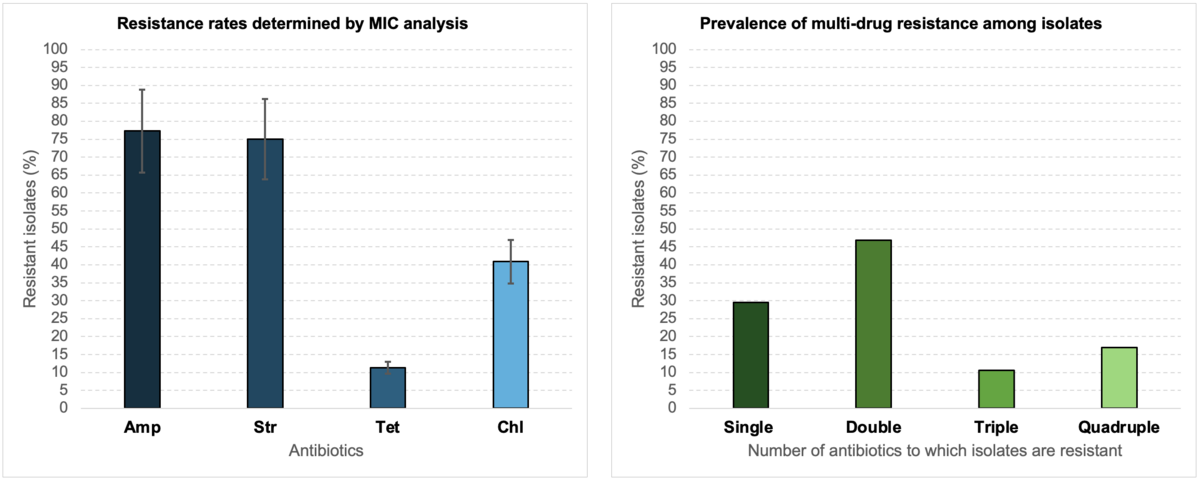
In total, 44 resistant isolates representing 14 bacterial genera were identified, with Bacillus and Enterobacter being the most prevalent. Antibiotic-resistant bacteria were most abundant in soil, followed by feed and freshwater. Resistance was highest to ampicillin (77.27%) and streptomycin (75%), moderate chloramphenicol (40.91%), and lowest to tetracycline (11.36%). More than 70% of isolates showed resistance to more than one antibiotic (Fig. 1). Resistance patterns differed among bacterial genera and were unevenly distributed across environmental compartments, indicating that habitat-specific factors influence both bacterial composition and resistance profiles.
The obtained results show that ecological farmland environments, particularly agricultural soils, support diverse bacterial populations with frequent multidrug resistance. Further work targeting a broader range of resistance genes would help clarify the mechanisms underlying the observed resistance patterns.
This project has received funding from the Research Council of Lithuania (LMTLT), agreement No S-MIP-23-7.