The subject of this research is lithium lanthanum titanate (LLTO). LLTO ceramics are known for their chemical stability as well as high ionic conductivity. These properties could allow for improvement of lithium-ion batteries by replacing the organic electrolyte with a solid one.
Current lithium-ion batteries have some drawbacks such as capacity loss during charge-discharge cycles causing degradation over time, as well as safety concerns. Liquid-free batteries could offer better thermal stability, absence of leakage, and a potentially longer lifespan, leading to less waste and pollution.
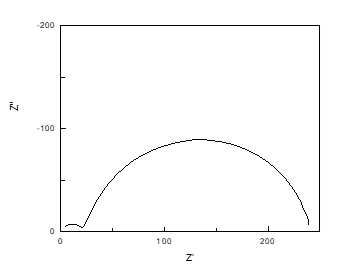
To learn of the physical properties of LLTO ceramics, both X-ray Diffraction (XRD) and Scanning Electron Microscopy (SEM) were used, while the electrical properties were investigated using Impedance Spectroscopy. Using these methods to investigate LLTO ceramics, a high grain boundary resistance was observed. That is not ideal and ways to lower it should be explored.